

Digital Library
Learn all about our work of research and documents curation.
Proposed Directives in Europe

Proposal for a Directive of the European Parliament and of the Council on improving working conditions on digital platforms
Determines the presumption of employment for digital platform workers and establishes rules for transparency and oversight of digital platforms.
Author: European Commission, European Parliament, and Council of the European Union
Year of Publication: 2024
Law 12 of 2021 (Riders Law)
Determines the presumption of employment and establishes rules for transparency on food delivery platforms
Author: Spanish Government
Year of Publication: 2021
Law 13 of 2023
Among several reforms to the Portuguese Labor Code, Article 12-A is introduced, which establishes the presumption of employment in digital platform work.
Author: Assembly of the Republic of Portugal
Year of Publication: 2023
Law containing various provisions related to work - October 3, 2022
Among the various reforms to Belgian labor legislation, Title XIII of the Loi-Programme is introduce.
Author: Belgian Government
Year of Publication: 2022
Judicial Decisions of European and Latin American Courts
Recognition of the employment relationship of a service platform worker
This is the first of seven rulings handed down by the Spanish Supreme Court recognizing the employment relationship of workers in the food delivery platform sector.
Author: Spain
Year of Publication: 2020
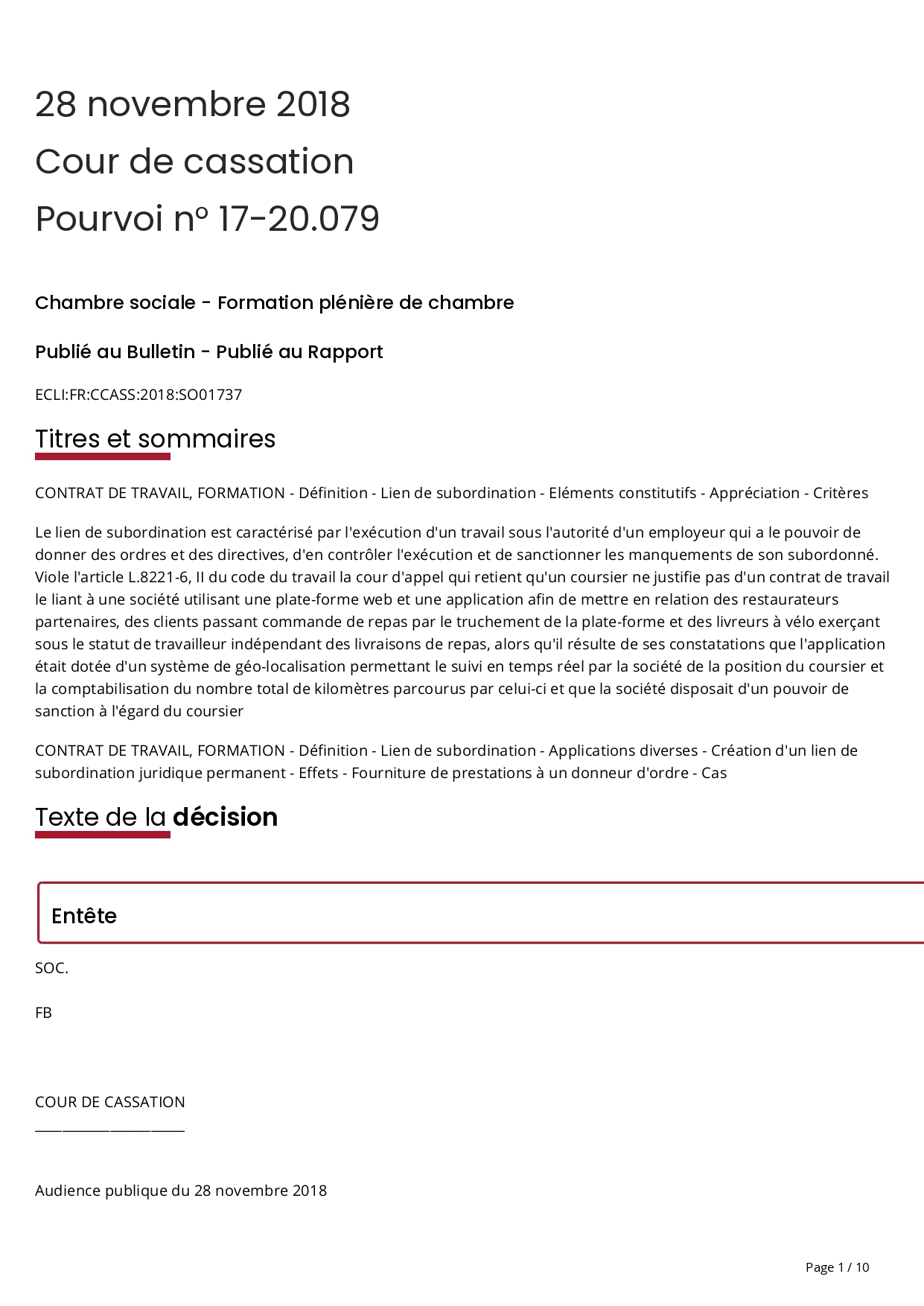
Recognition of employment relationships in the food delivery sector
This is the first of four decisions in which the French Court of Cassation recognized the employment relationship in the food delivery sector and, in this first case, issued an important ruling recognizing as an employee.
Author: France
Year of Publication: 2018
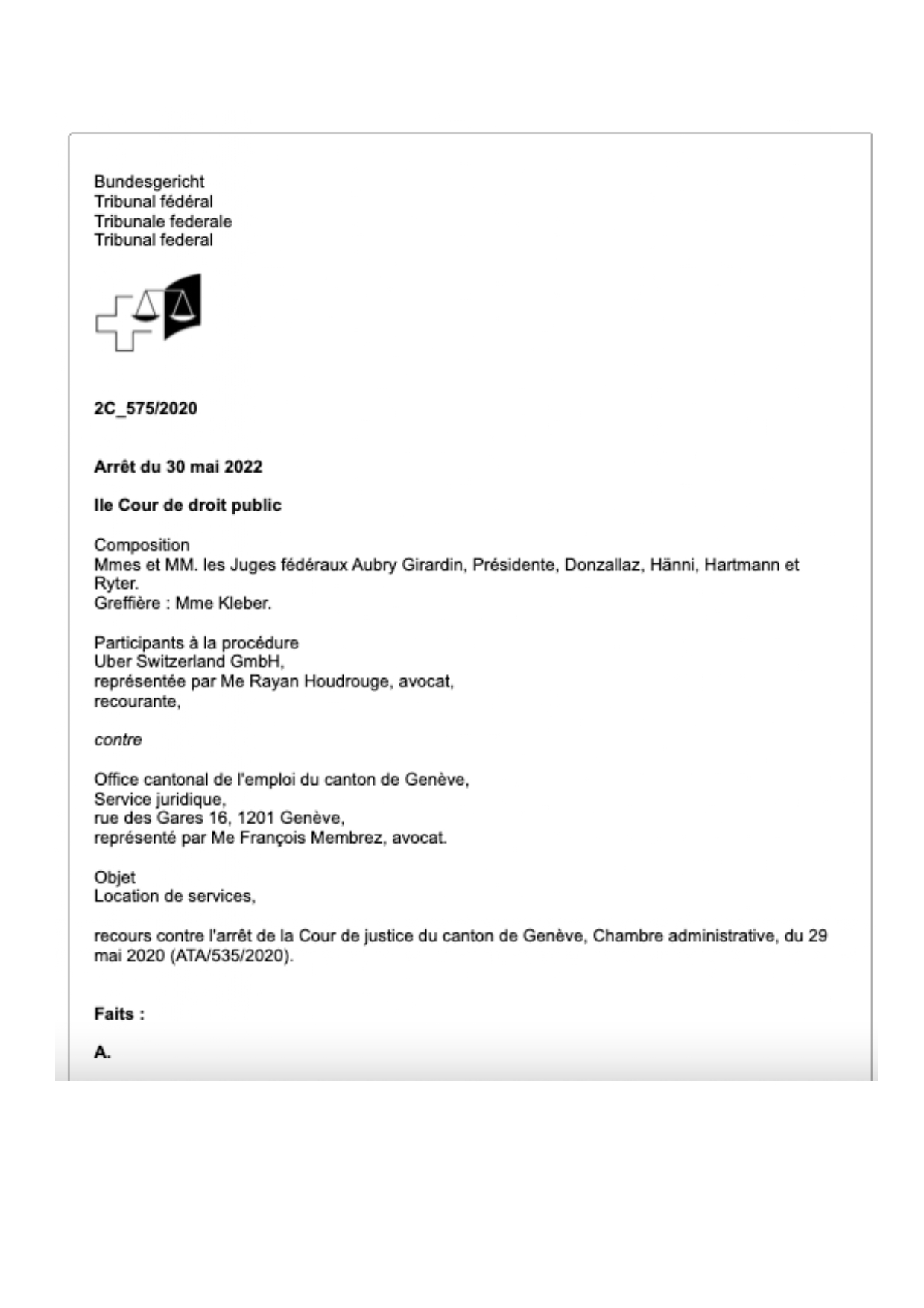
Recognition of employment relationship in a case concerning the food delivery sector
In May 2022, the Swiss Federal Court recognized the employment relationship.
Author: Switzerland
Year of Publication: 2022
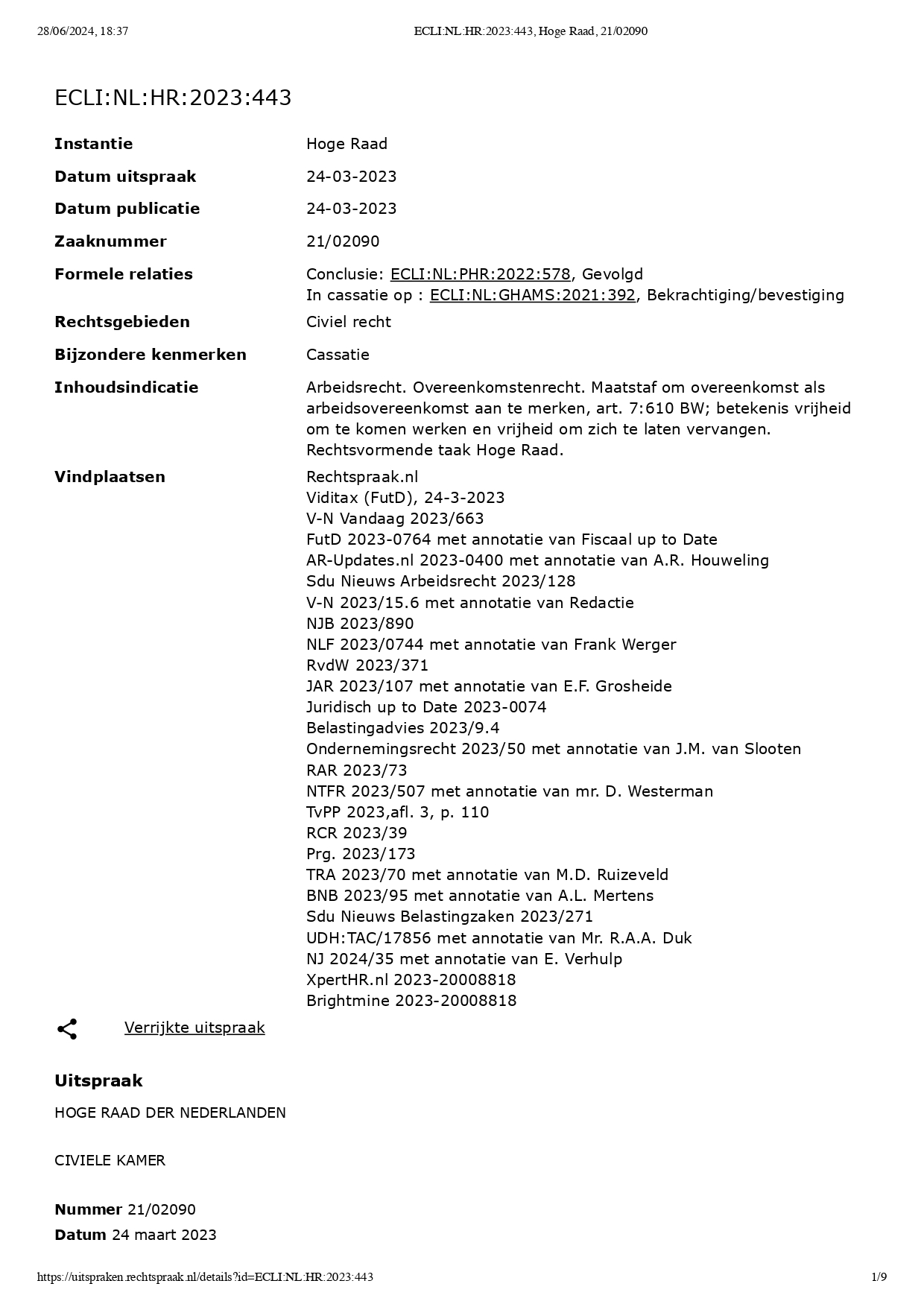
Recognition of employment relationships in the food delivery sector
The Dutch Supreme Court recognized the employment relationship in the food delivery sector in March 2023.
Author: the Netherlands
Year of Publication: 2023
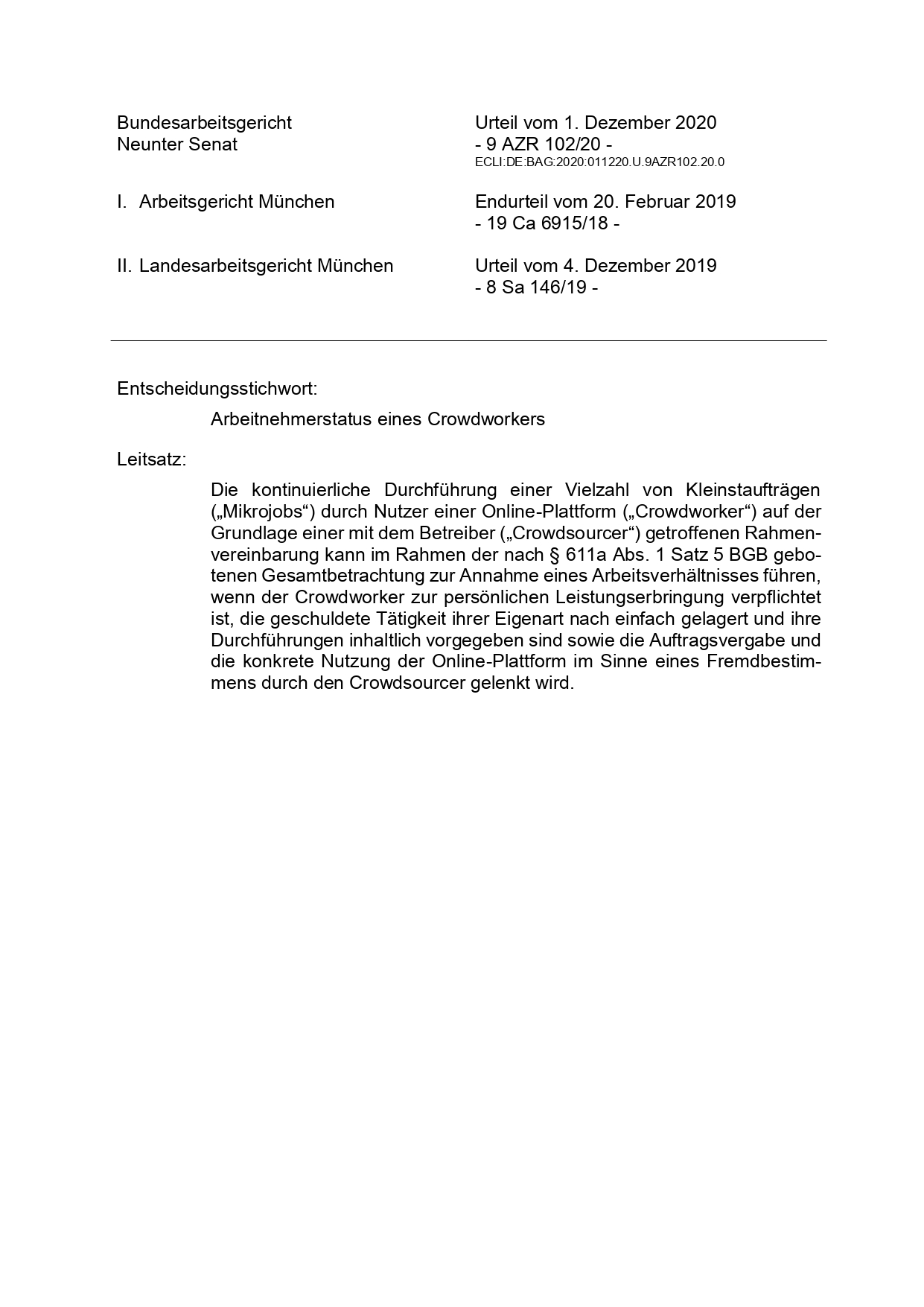
Recognition of the employment relationship of a service platform worker
The German Federal Labor Court recognized a worker on a mystery-shopping shopping platform as an employee.
Author: Germany
Year of Publication: 2020
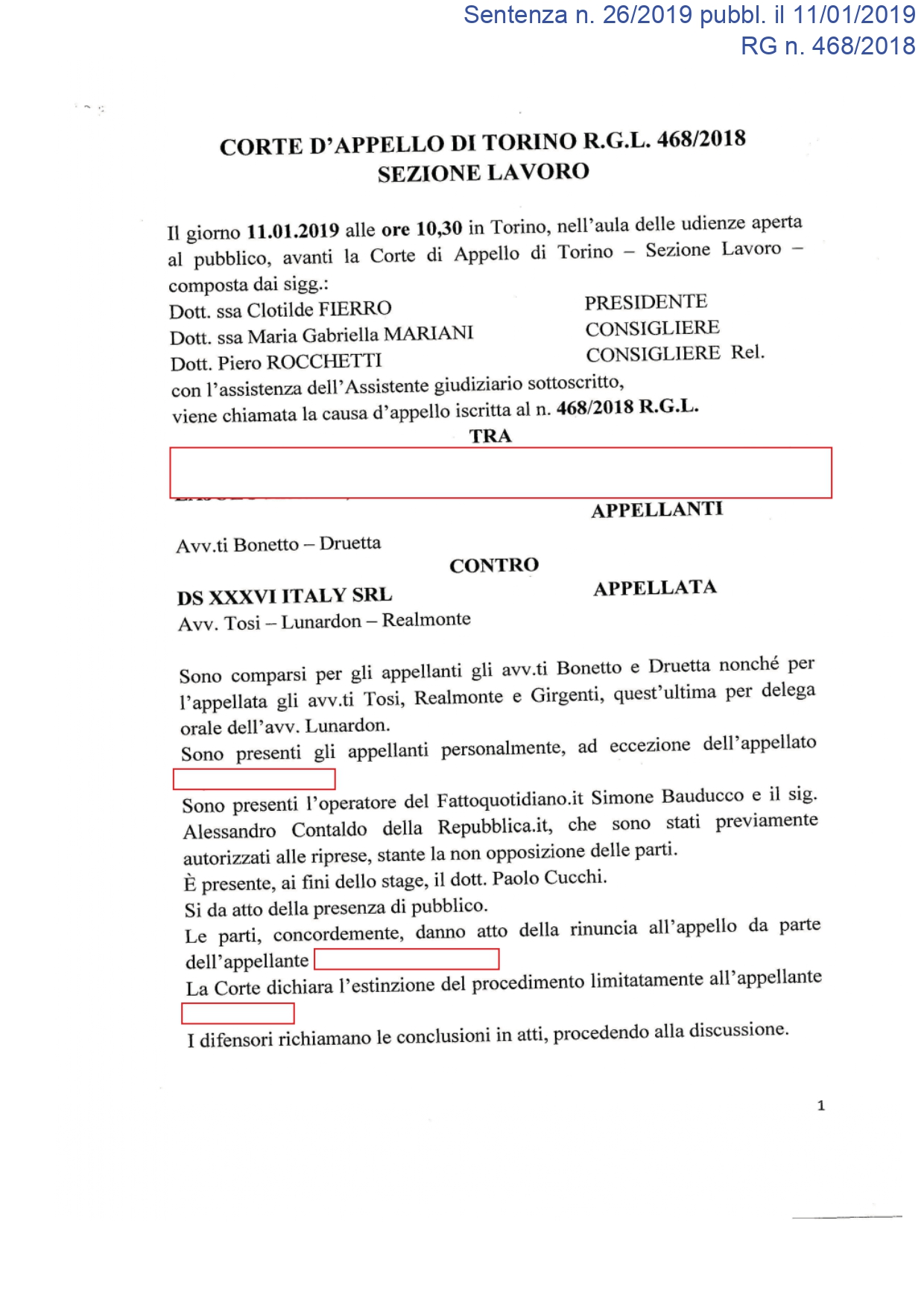
Granting a set of rights to workers in the food delivery sector
The Italian Court of Cassation used the category of “lavoro eteroorganizzato” [hetero-organized work] to grant a set of rights to workers in the food delivery sector.
Author: Italy
Year of Publication: 2020
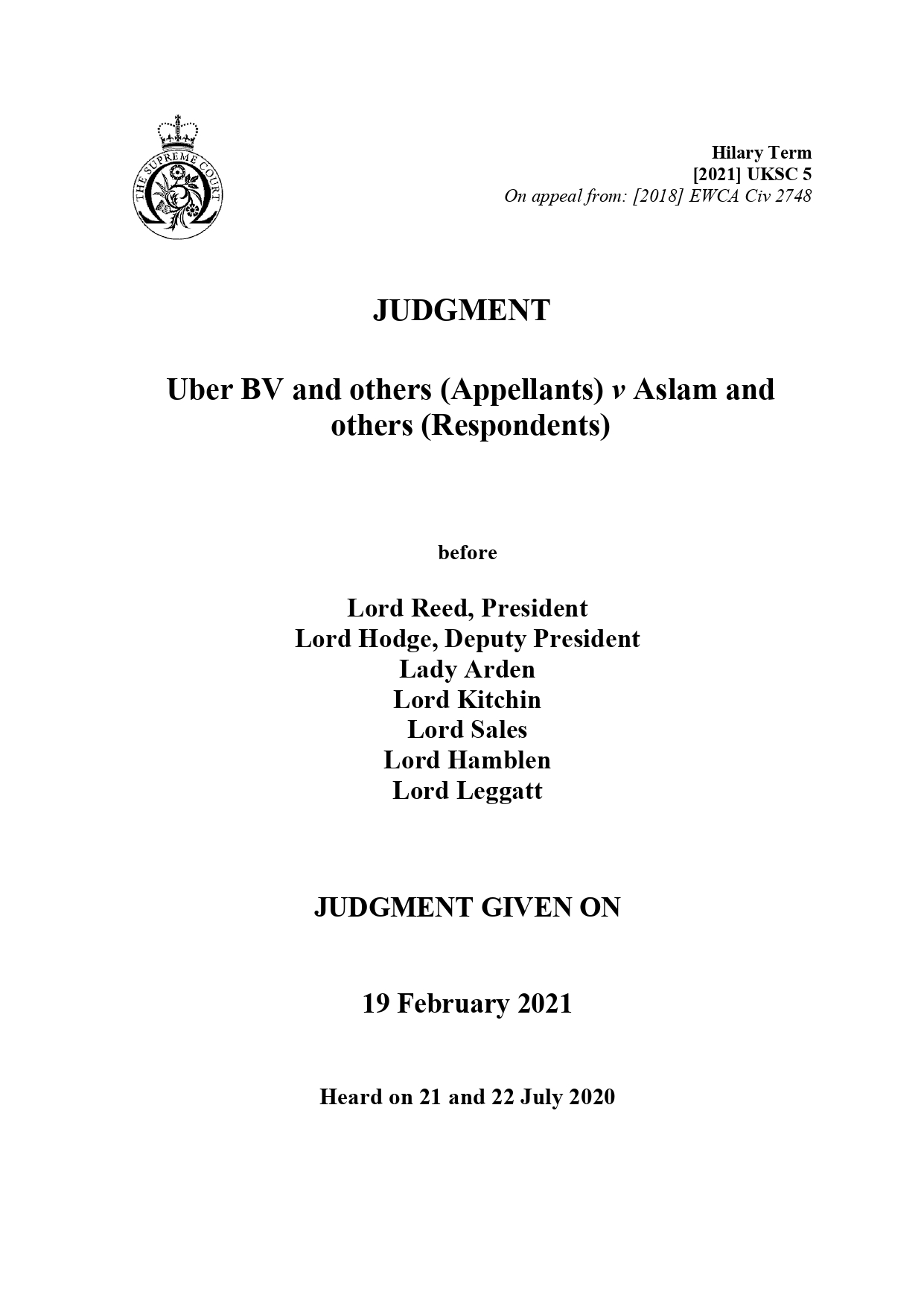
Granting of a set of rights to workers in the private platform-based transportation sector
The British Supreme Court used the intermediate category of workers to grant a set of rights to a group of drivers in the private platform-based transportation sector. In 2023, it classified workers in the platform-based food delivery sector as self-employed.
Author: United Kingdom
Year of Publication: 2018
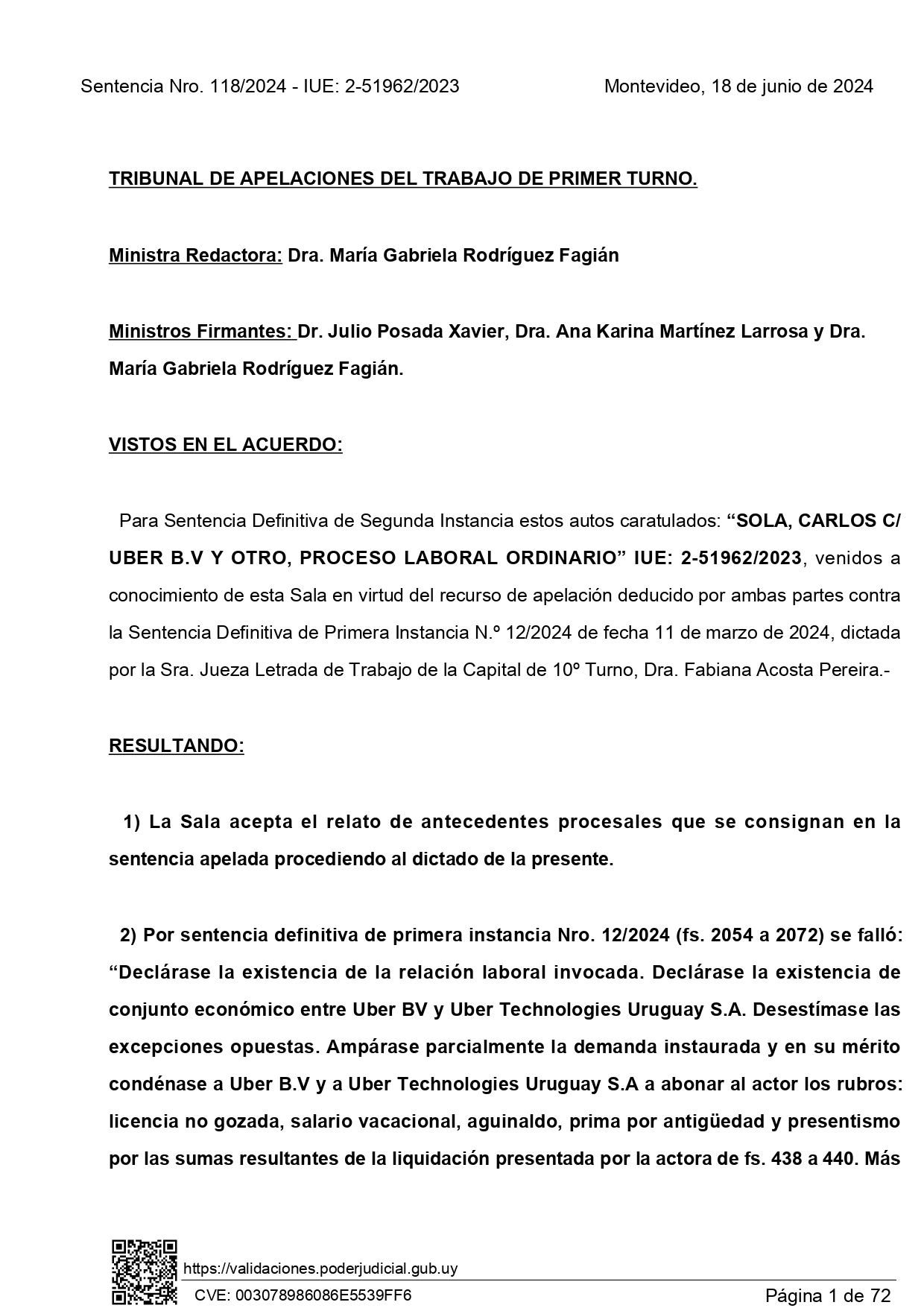
Recognition of subordination and employment relationship
The First Labor Court ruled in favor of a driver and upheld the ruling that required Uber to pay his social security contributions and labor rights, considering that there was a relationship of subordination.
Author: Uruguay
Year of Publication: 2024
Technical Note Conafret/Mpt
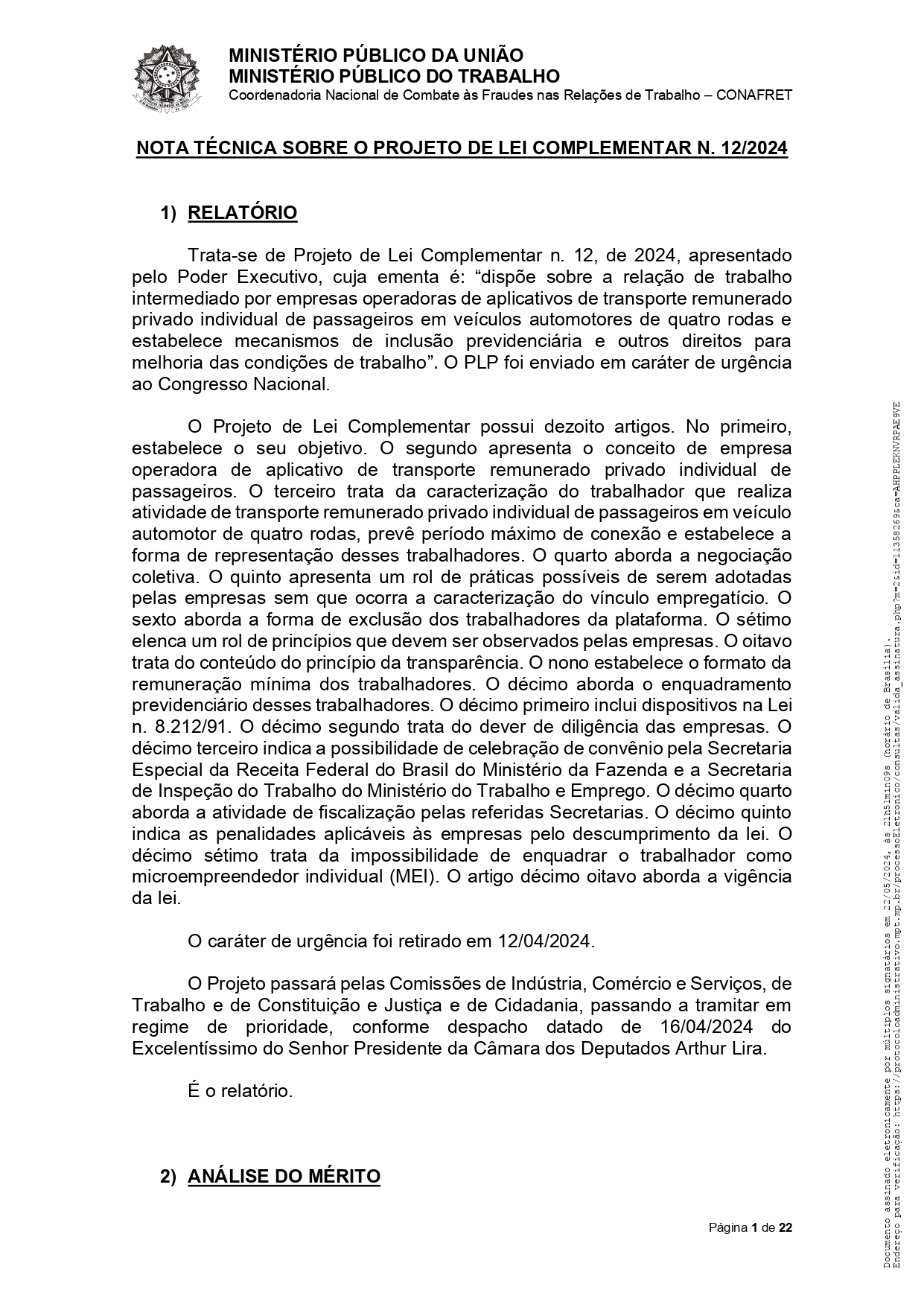
Technical note on supplementary bill no. 12/2024
This is a technical note that evaluates the legal content of Complementary Bill No. 12 of 2024, presented by the Executive Branch in 2024.
Author: MPT
Year of Publication: 2024
Research Reports
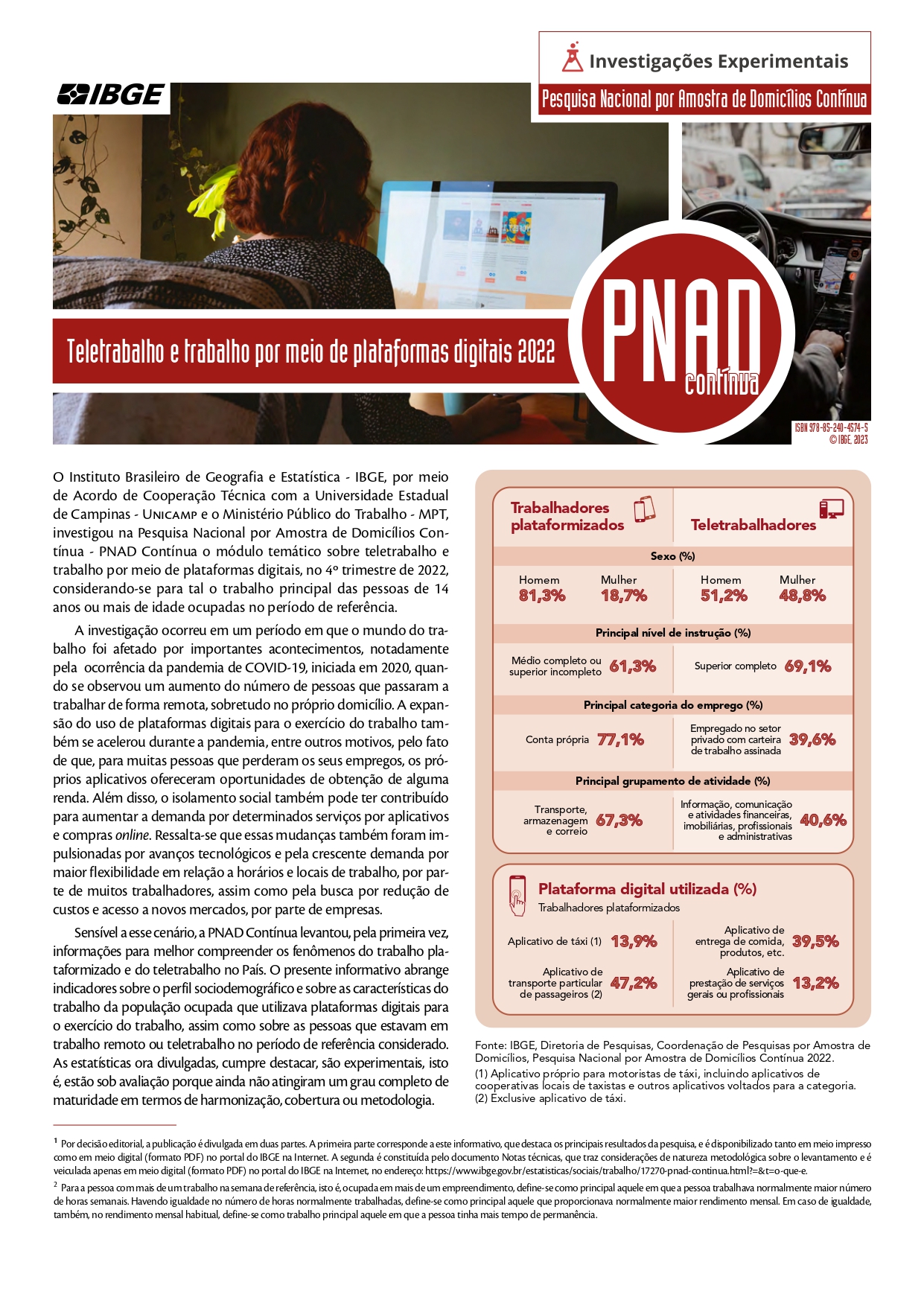
Teleworking and work through digital platforms 2022 / IBGE
Author: IBGE / PNAD
Year of Publication: 2023
Working conditions, rights, and social dialogue for workers in the app-based delivery sector in Brasília and Recife
Author: Ricardo Festi et al.
Year of Publication: 2021
Digital labor platforms and national employment policies in China: Studying the case of food delivery platforms
Author: Julie Yujie Chen & Ping Sun
Year of Publication: 2023
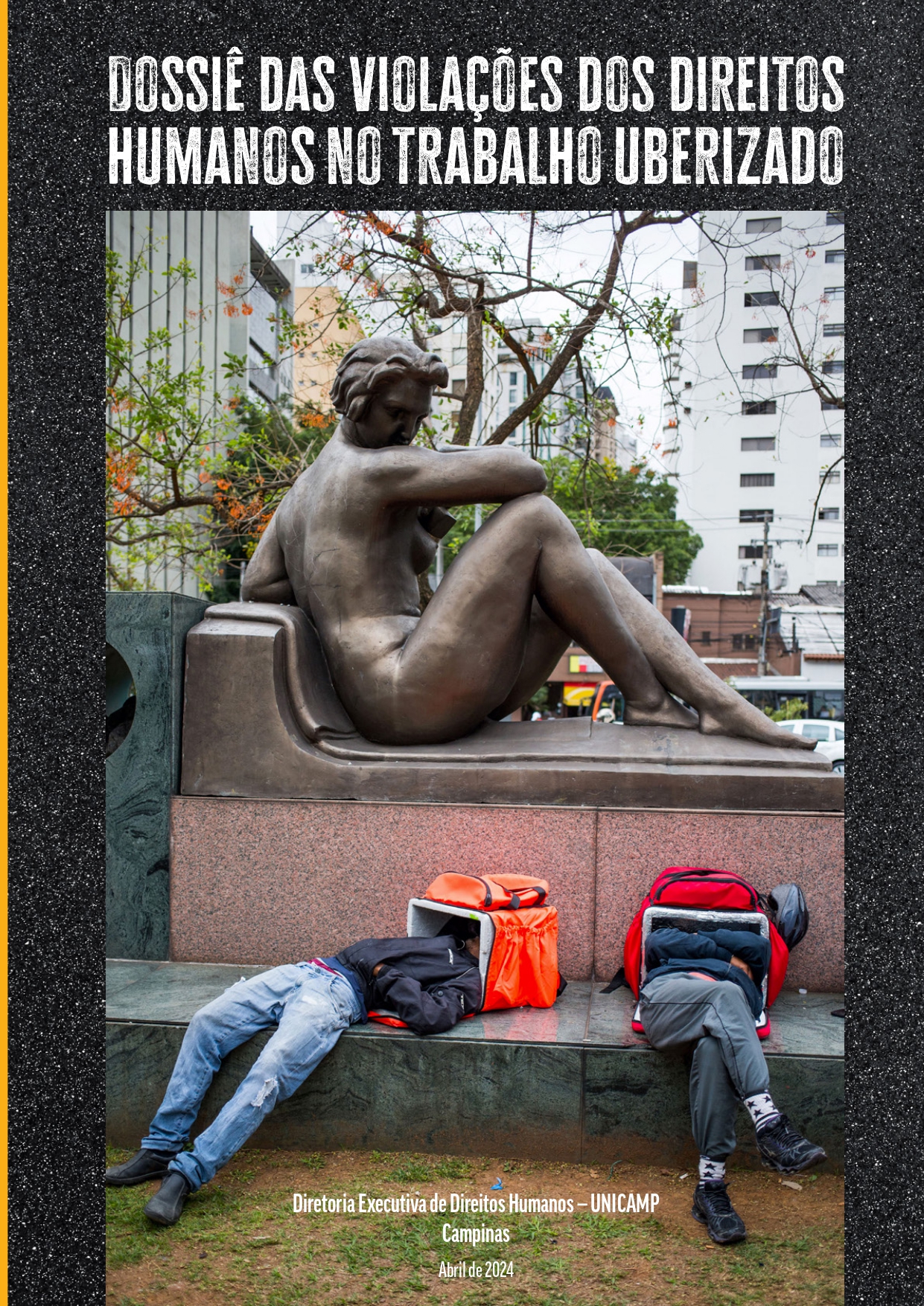
Dossier on human rights violations in Uberized work: the case of motorcycle couriers in the city of Campinas
Author: Ludmila Costhek Abílio & Silvia Maria Santiago
Year of Publication: 2024
Survey on the work of delivery personnel and drivers for so-called "digital platforms"
Author: Vitor Araújo Filgueiras
Year of Publication: 2023
Health of the Black Population: Accidents and adverse incidents during hospitalization by race/color
Author: Rony Coelho et al.
Year of Publication: 2023

Work controlled by digital platforms: dimensions, profiles, and rights
Author: Sidnei Machado et al.
Year of Publication: 2022
Work on digital platforms and the COVID-19 pandemic: analysis of data from Pnad Covid-19/IBGE
Author: Raphael Santos Lapa
Year of Publication: 2021
Panel on the gig economy in Brazil's transportation sector: who, where, how many, and how much they earn
Author: Geraldo Góes, Antony Firmino & Felipe Martins
Year of Publication: 2022

The platformization of work in Europe - highlights from research in 13 European countries
Author: Ursula Huws et al.
Year of Publication: 2020
Articles in Journals and Books
Platform-based Work
Contextualizing work on platforms
The article presents a contextualization of digital platforms, demonstrating that their digital infrastructures are structured by data, organized by algorithms, and governed by property relations, with norms and values embedded in their designs. Despite all this organization, their modes of operation depend on various forms of living labor, with different ways of extracting value.
Author: Rafael Grohmann & Jack Qiu
Year of Publication: 2020
Driving for Uber: a study of legal subordination based on ethnography
This thesis investigates whether the provision of services by Uber drivers constitutes one of the requirements of an employment relationship, namely subordination. From a multidisciplinary perspective, combining law, sociology, and anthropology, the objective of this thesis is to highlight the elements that constitute this boundary between the formal and informal sectors.
Author: Ilan Fonseca
Year of Publication: 2023
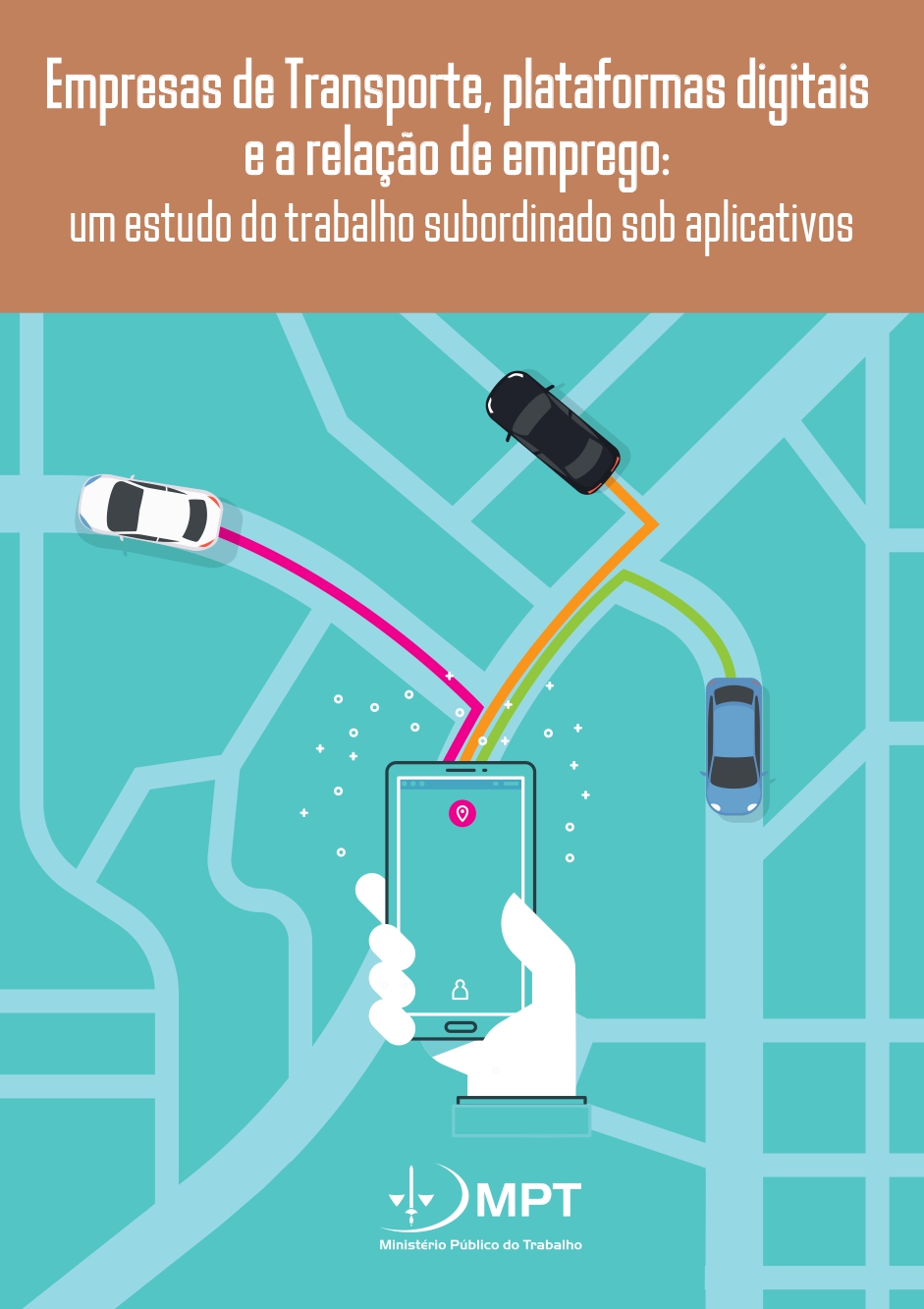
Transportation companies, digital platforms, and the employment relationship: a study of subordinate work under apps
This work is the result of the Study Group called "GE Uber," established by Ordinance PGT No. 681, of November 10, 2016, within the scope of the National Coordination for Combating Fraud in Labor Relations (Conafret) of the Public Ministry of Labor, with the initial objective of furthering studies on new forms of work organization related to activities carried out through applications.
Author: Juliana Carreiro Corbal Oitaven et al.
Year of Publication: 2018

The future of work: the effects of the digital revolution on society
The book deals with transformations in the world of work and the impacts that digital platforms have on working conditions.
Author: Rodrigo Carelli, Tiago Cavalcanti & Vanessa Patriota
Year of Publication: 2020
Digital work, its meanings and effects in the context of pandemic capitalism
The article examines the general characteristics of the phenomenon, the meanings and effects of digital art, situating it within the general social processes of the contemporary historical context.
Author: Fabio Perocco et al.
Year of Publication: 2021
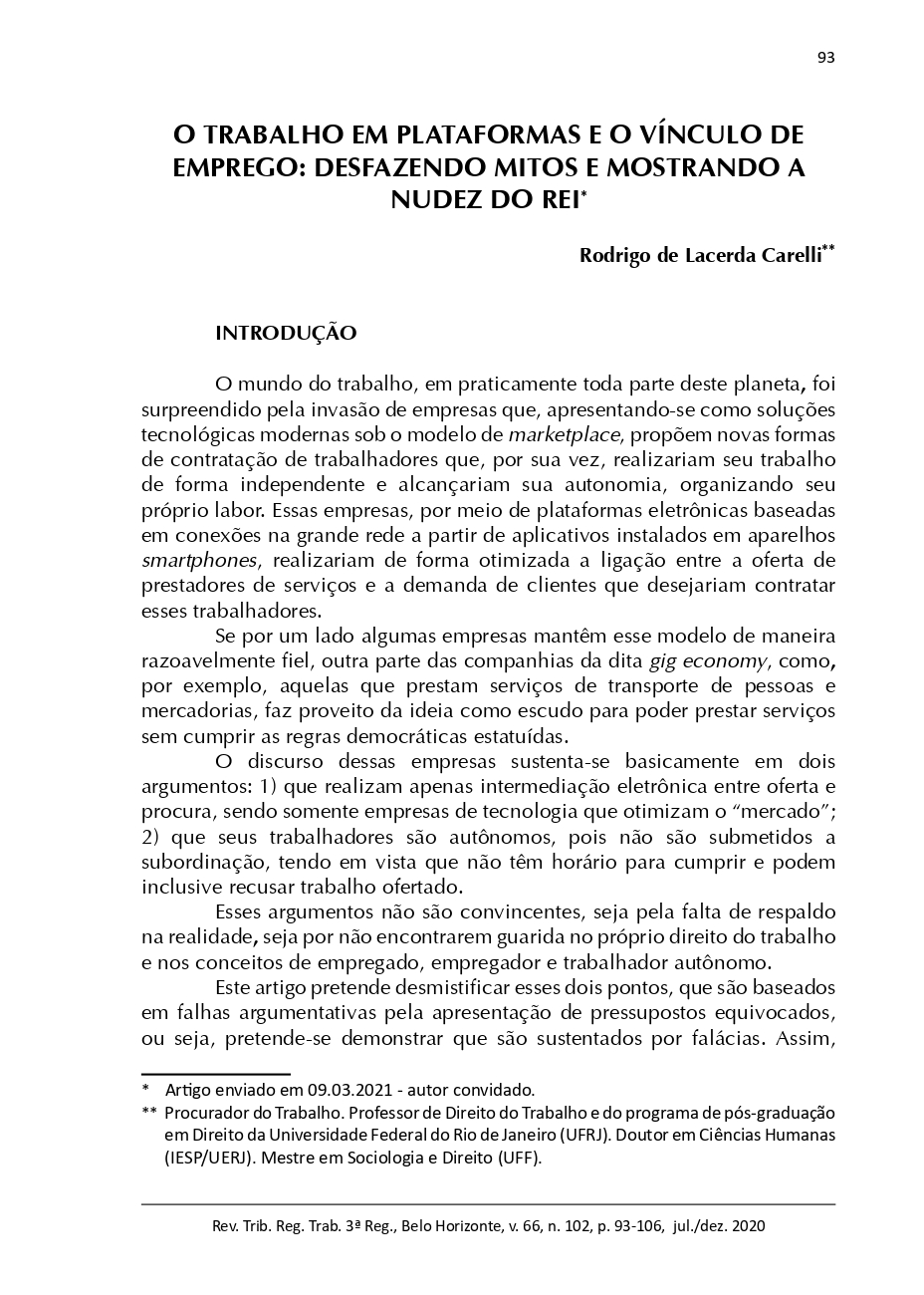
Working on platforms and employment contracts: dispelling myths and exposing the Emperor's new clothes
The article aims to demystify these two points, which are based on flawed arguments presenting mistaken assumptions, i.e., it aims to demonstrate that they are supported by fallacies.
Author: Rodrigo Carelli
Year of Publication: 2020
Digital platforms, the Uberization of work, and regulation in contemporary capitalism
The article analyzes the relationship between workers and "platforms" and "apps," as well as the possibilities for their regulation, in light of the use of new information and communication technologies (ICT).
Author: Ricardo Antunes & Vitor Filgueiras
Year of Publication: 2020

Work on Platforms: Regulation or Deregulation?
The book brings together texts that address the international context of work on digital platforms, in addition to more comprehensive research on judicial decisions handed down by European courts, which had a significant influence on the drafting of the European Directive, which seeks to correct false self-employment and places limits on algorithmic management, highlighting the global trend toward protecting the most basic labor rights.
Author: Ricardo Antunes et al.
Year of Publication: 2024
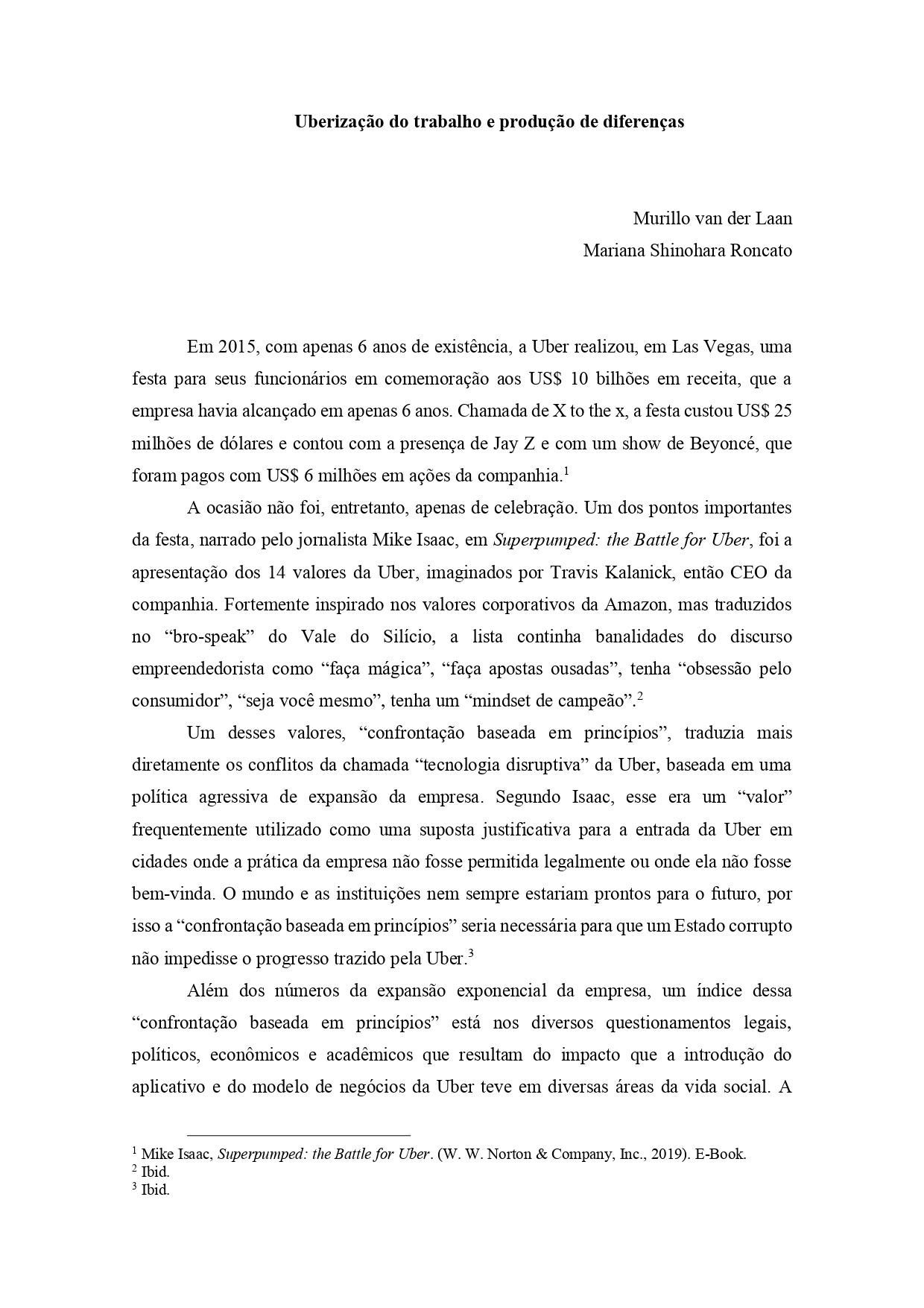
Uberization of work and the production of differences
The article reflects on platform-based work and race and gender relations.
Author: Mariana Shinohara Roncato & Murillo van der Laan
Year of Publication: 2023
Algorithmic Management
Consequences of algorithmic management for work organization and working conditions
The article analyzes examples from the above industries, along with more detailed case studies of platform work. This allows us to outline the main ways in which algorithms are deployed to automate the management, evaluation, and discipline of the workforce.
Author: Alex Wood
Year of Publication: 2021
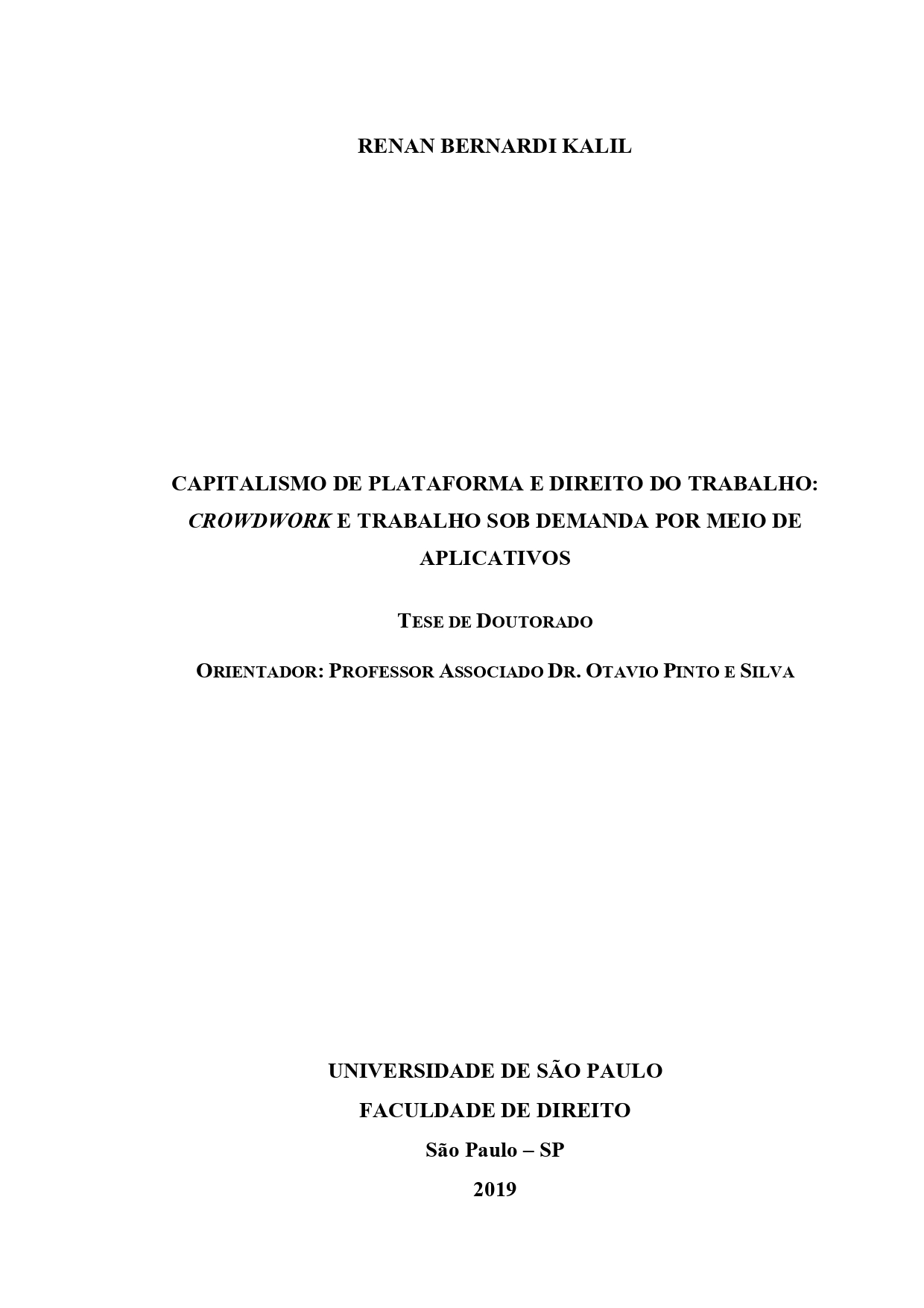
Platform capitalism and labor law: crowdwork and on-demand work through apps
The thesis identifies two forms of work in platform capitalism—crowdwork and on-demand work through apps—to investigate the concrete effects of technological innovations on labor relations. It aims to answer whether labor law tools protect workers who perform activities on digital platforms.
Author: Renan Khalil
Year of Publication: 2019
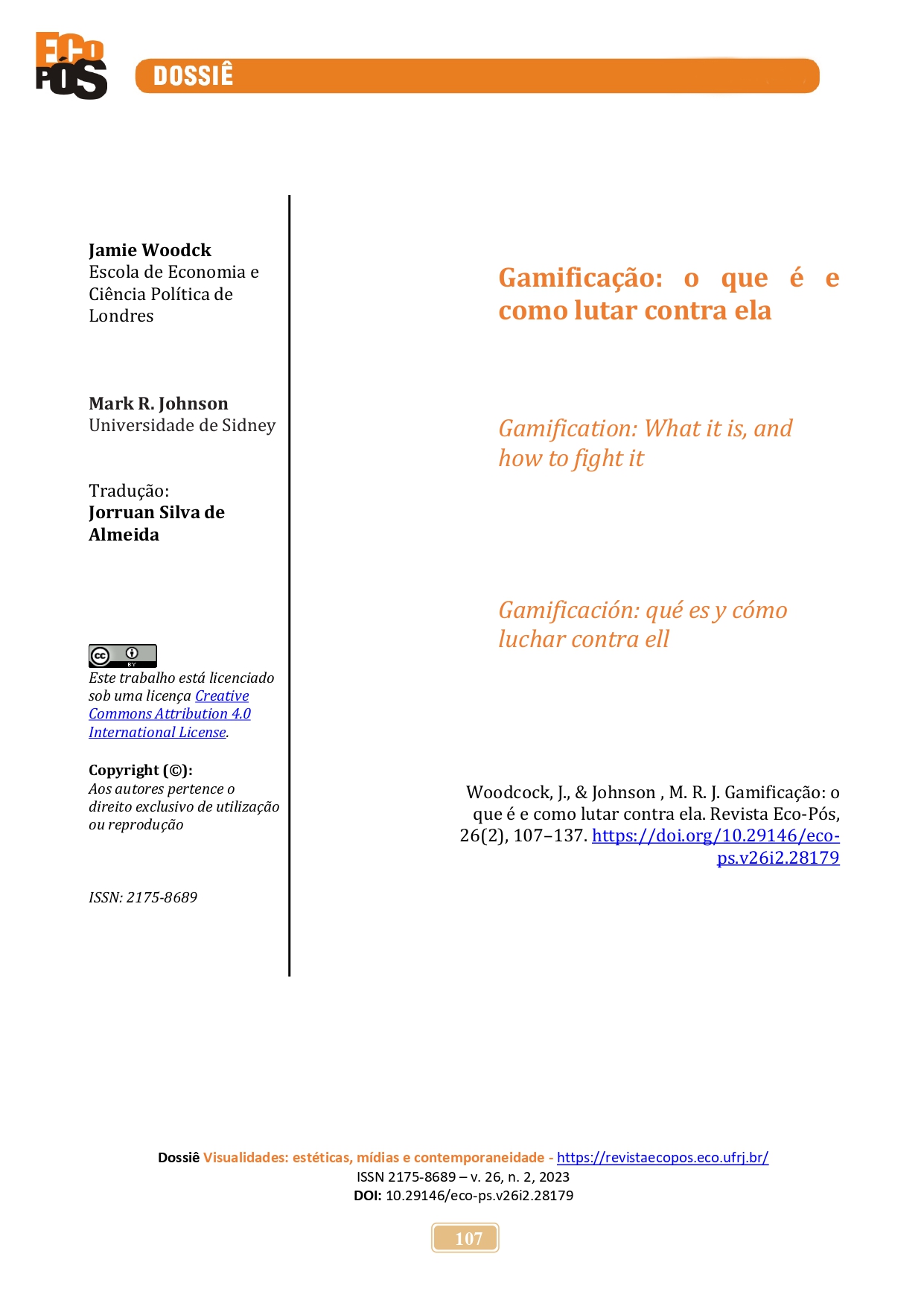
Gamification: what it is and how to combat it
Throughout the article, the authors distinguish between two types of gamification: first, 'top-down gamification', involving the optimization and rationalization of work practices by management; and second, 'bottom-up gamification', a form of active resistance against control at work. The article concludes with a renewed call for this 'bottom-up gamification', which is an ideal form of resistance against top-down gamification and its capture of the game in pursuit of work.
Author: Jamie Woodcock & Mark Johnson
Year of Publication: 2023
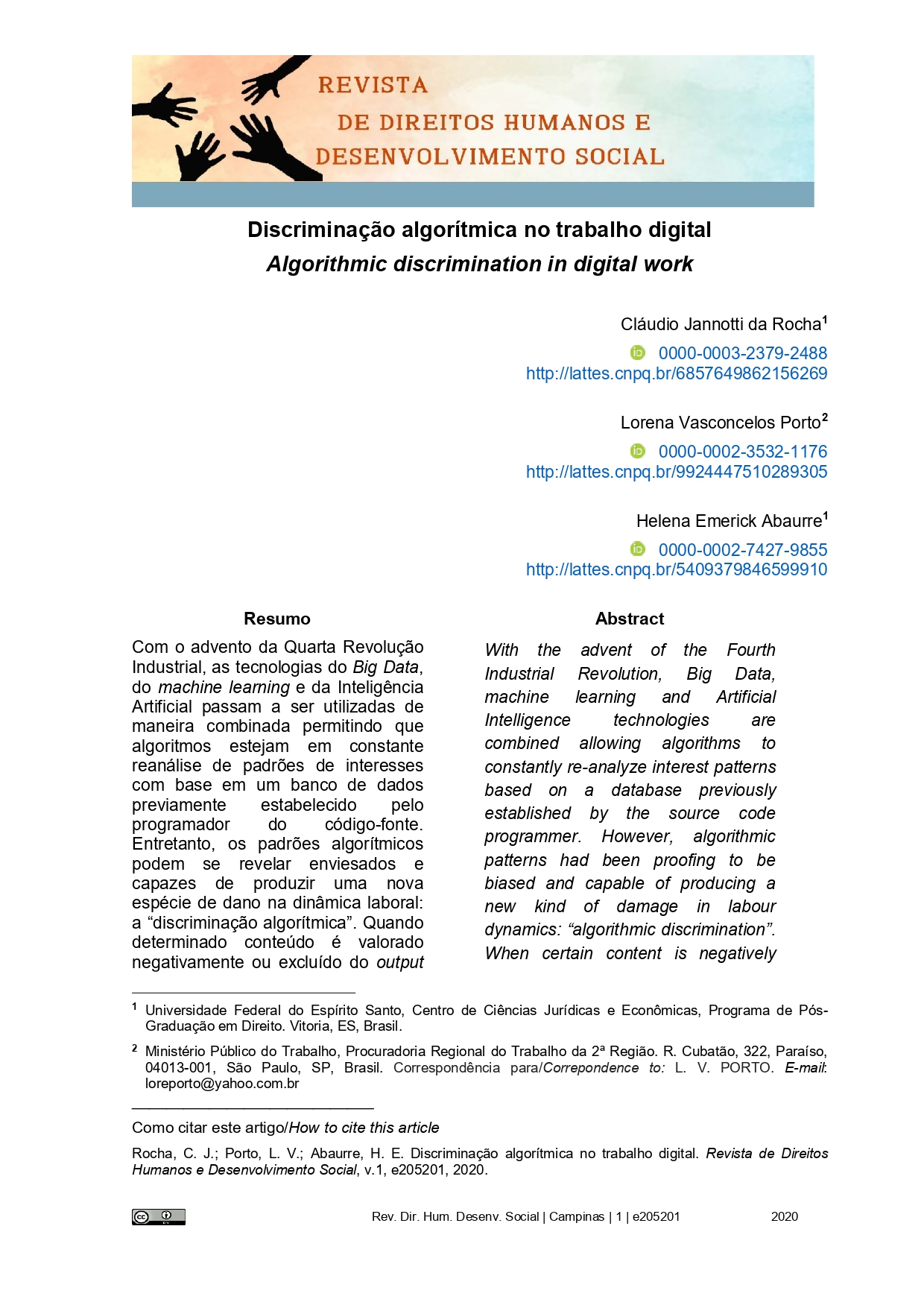
Algorithmic discrimination in digital work
The article shows how machine learning and artificial intelligence have come to be used in combination, allowing algorithms to constantly reanalyze patterns of interest based on a database previously established by the source code programmer.
Author: Cláudio Jannotti da Rocha et al.
Year of Publication: 2020
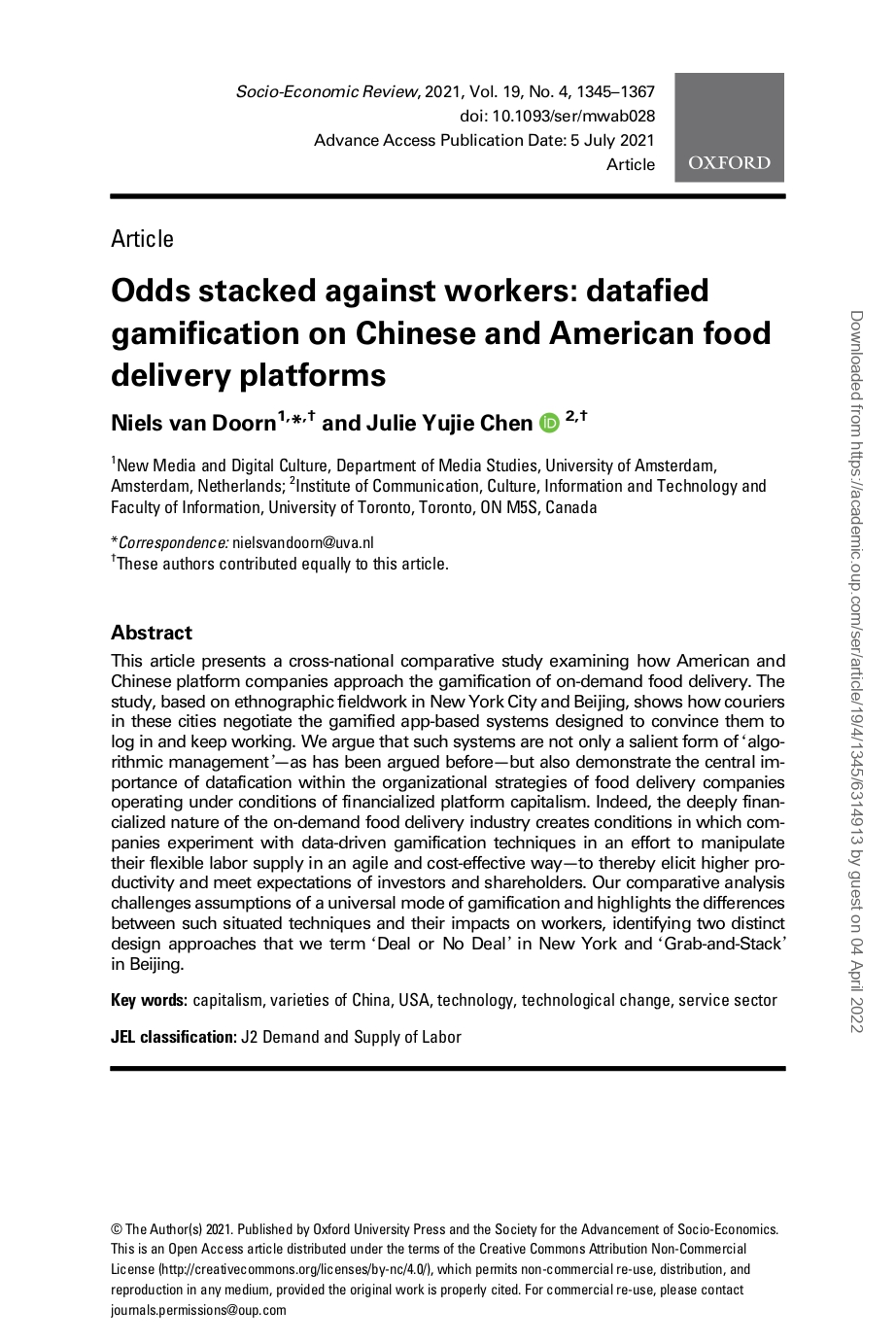
Odds Stacked Against Workers
The article presents a cross-national comparative study examining how American and Chinese platform companies approach the gamification of food delivery. The study, based on ethnographic fieldwork in New York City and Beijing, highlights how delivery drivers in both cities negotiate gamified systems designed to persuade them to log in and continue working.
Author: Ricardo Festi (UnB) – responsible for research in Brasília – and Roberto Véras & Niels van Doorn
Year of Publication: 2021
Job insecurity
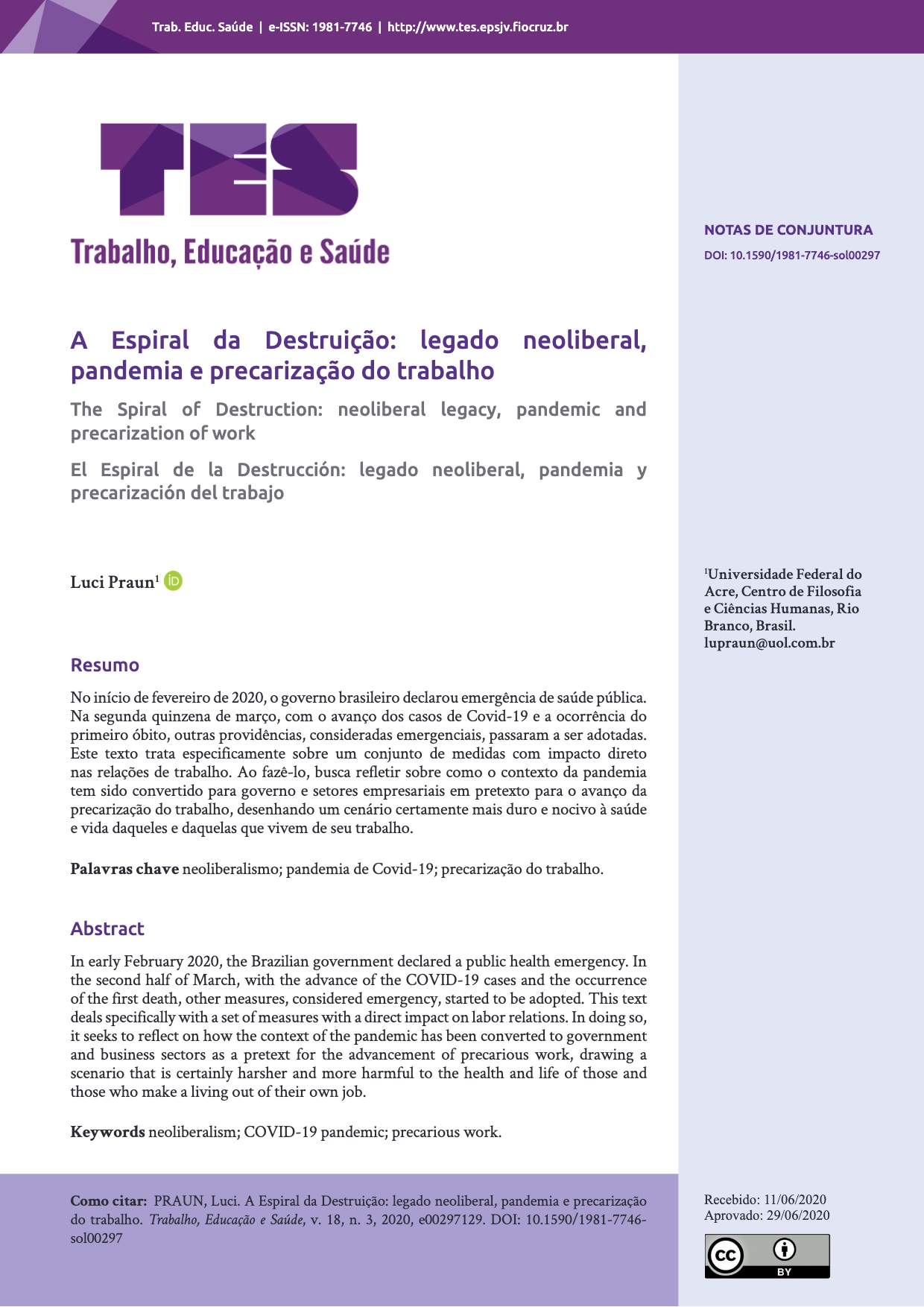
The spiral of destruction: neoliberal legacy, pandemic, and job insecurity
The article deals specifically with a set of measures that have a direct impact on labor relations. In doing so, it seeks to reflect on how the context of the pandemic has been converted by the government and business sectors into a pretext for advancing the precariousness of work, creating a scenario that is certainly harsher and more harmful to the health and lives of those who live off their work.
Author: Luci Praun
Year of Publication: 2020
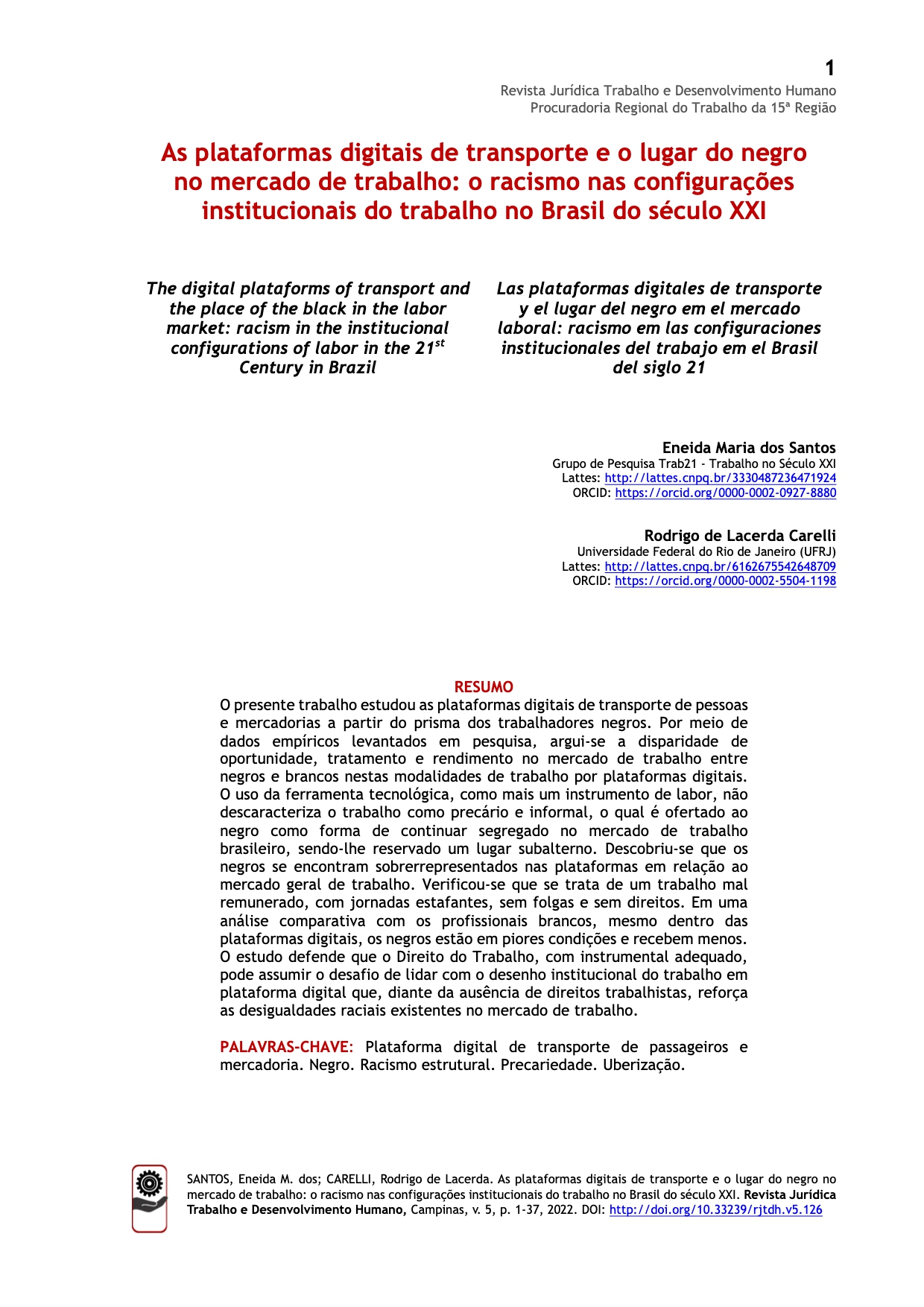
Digital transportation platforms and the place of Black people in the labor market: racism in institutional work settings in 21st-century Brazil
This article studied digital platforms for transporting people and goods from the perspective of Black workers. Based on empirical data collected in research, it argues that there is a disparity in opportunity, treatment, and income in the labor market between Black and white workers in these types of work on digital platforms.
Author: Rodrigo Carelli
Year of Publication: 2022
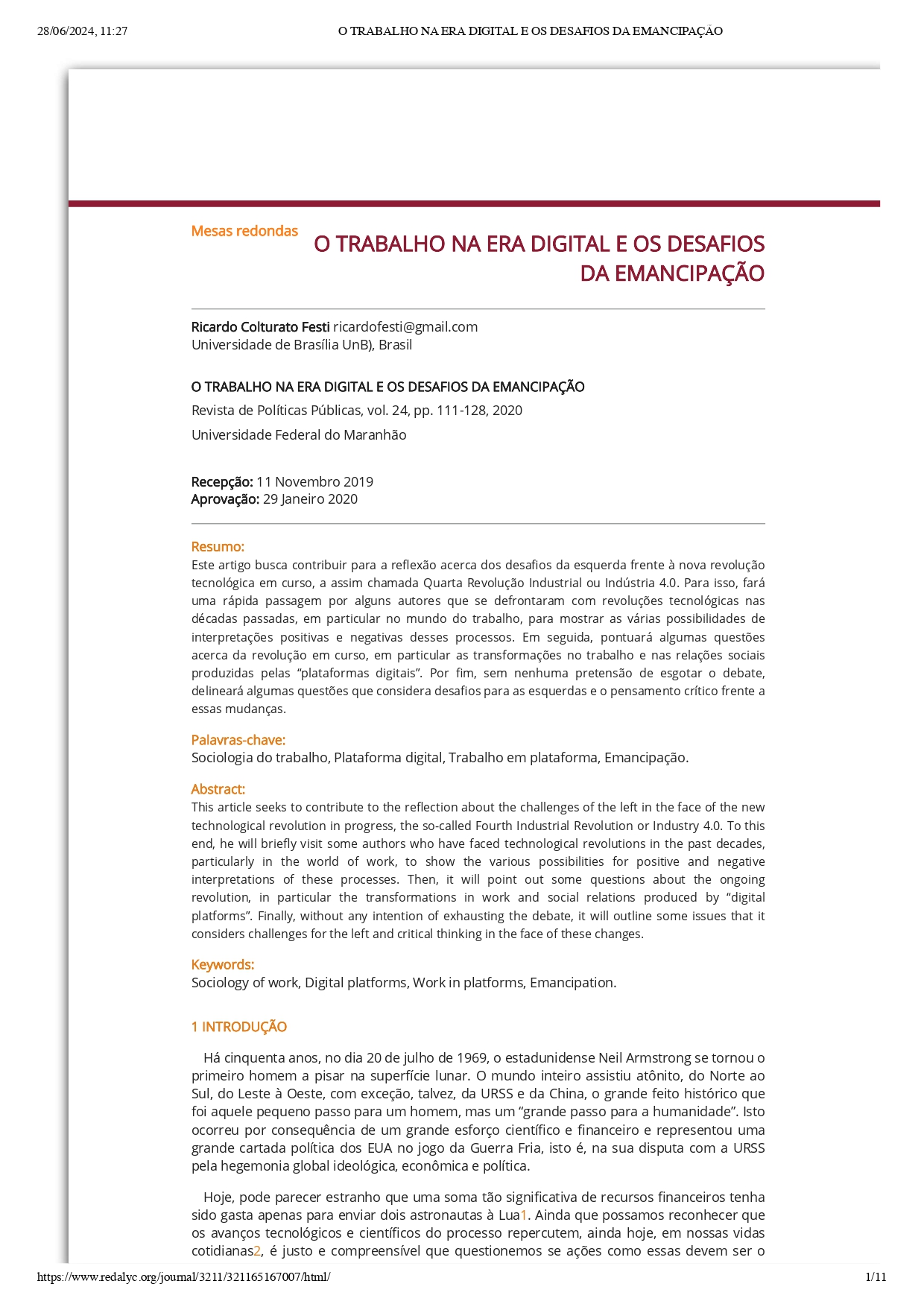
Work in the digital age and the challenges of emancipation
This article seeks to contribute to the reflection on the challenges, the so-called Fourth Industrial Revolution or Industry 4.0. To this end, it will briefly review some authors who have dealt with technological revolutions in past decades, particularly in the world of work, to show the various possibilities for positive and negative interpretations of these processes.
Author: Ricardo Festi
Year of Publication: 2020

The modes of informality: towards a new era of structural job insecurity?
The main objective of this text is to understand the modes of being of this process, its explanatory elements, as well as its connections with the law of value. In opposition to the assertion of the end of work, we can observe a significant increase in job insecurity and informality, which occurs in the forms of part-time, subcontracted, and precarious work.
Author: Ricardo Antunes
Year of Publication: 2011
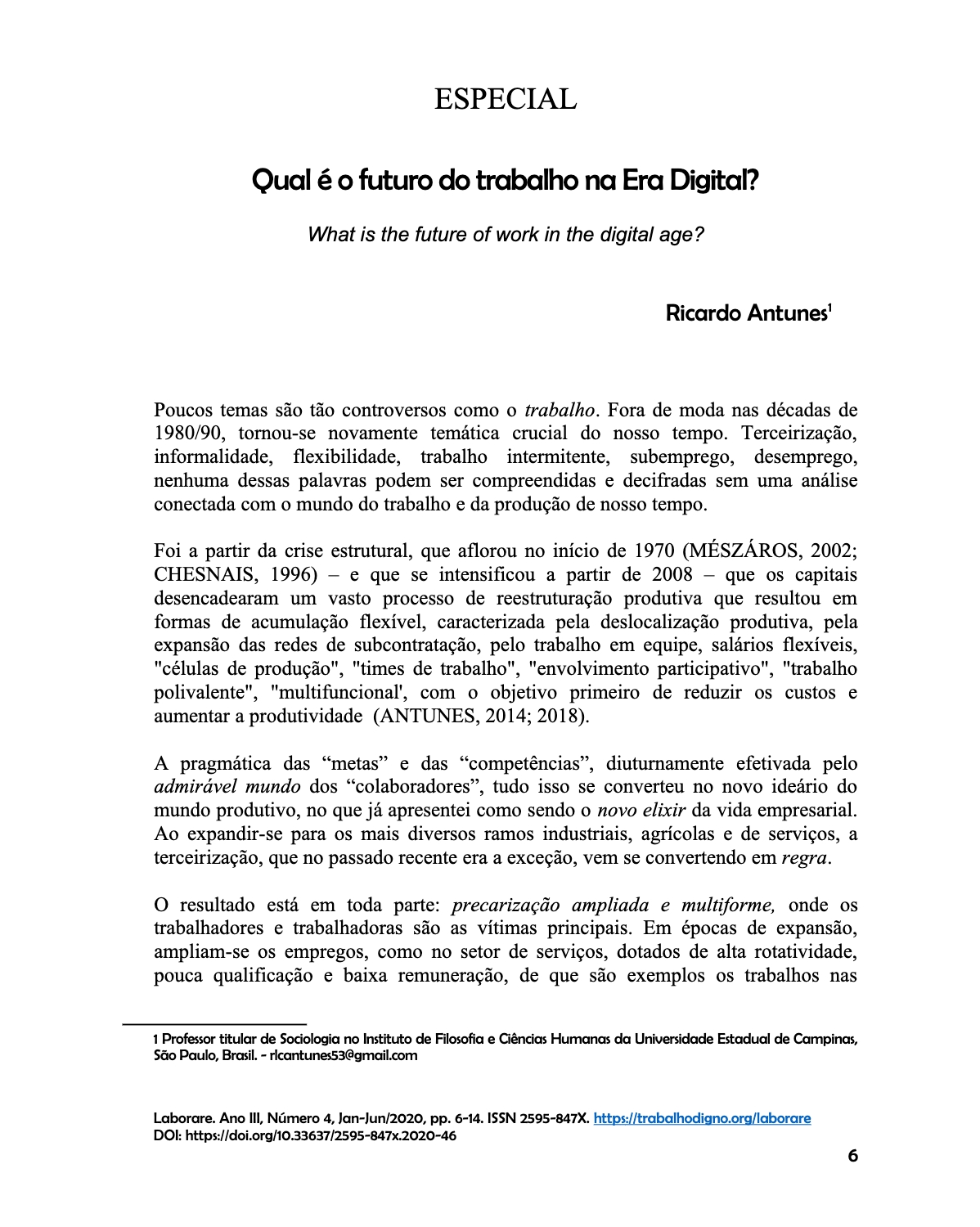
What is the future of work in the Digital Age?
The article presents an overview of the structure of the world of work and offers insights into understanding the meanings and conditions of work in the context of the digital work era.
Author: Ricardo Antunes
Year of Publication: 2020
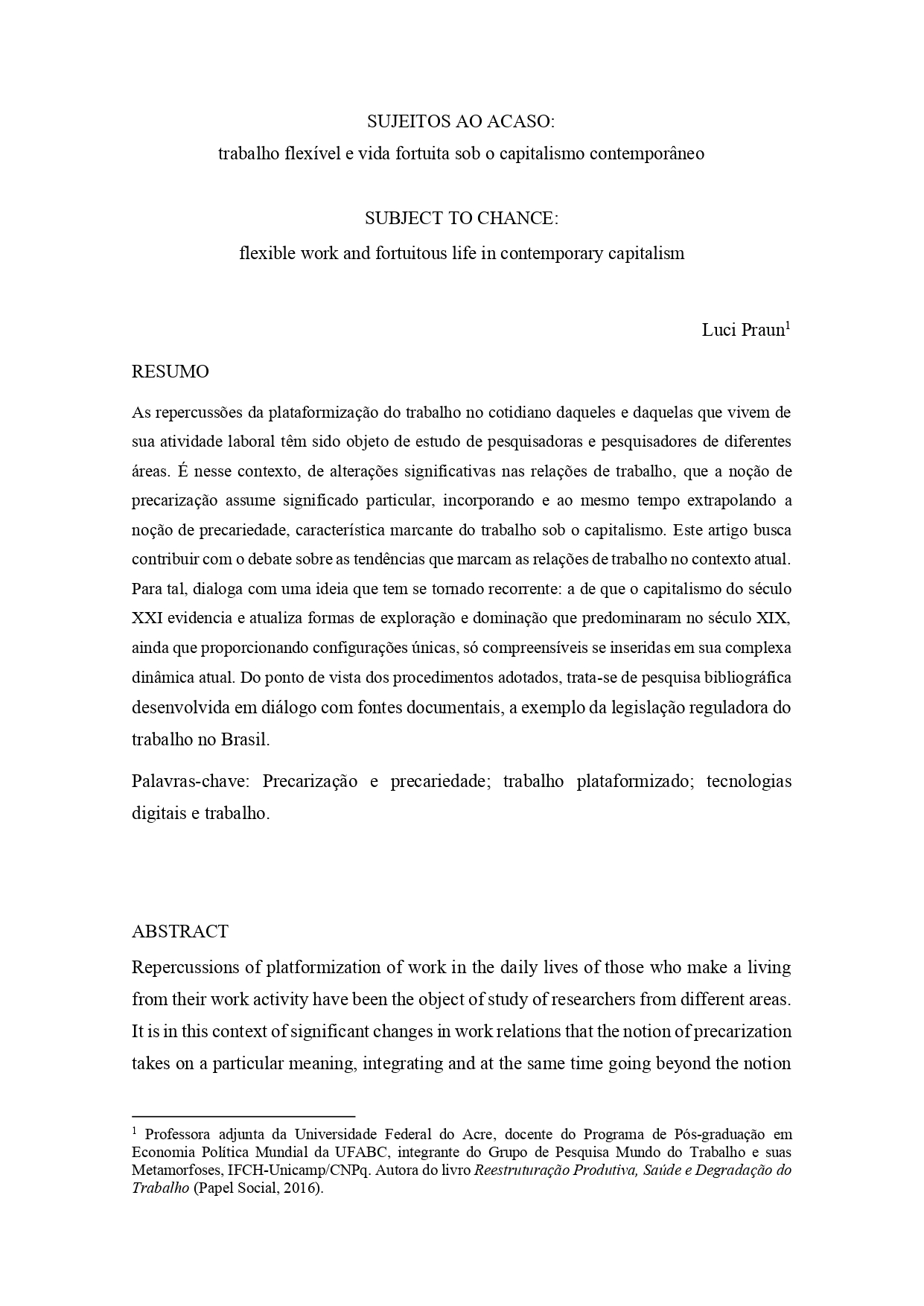
Subjects of chance: flexible work and fortuitous life under contemporary capitalism
This article seeks to contribute to the debate on trends shaping labor relations in the context. To this end, it engages with a recurring idea: that 21st-century capitalism highlights and updates forms of exploitation and domination that prevailed in the 19th century, albeit in unique configurations that can only be understood within the context of its complex current dynamics.
Author: Luci Praun
Year of Publication: 2023
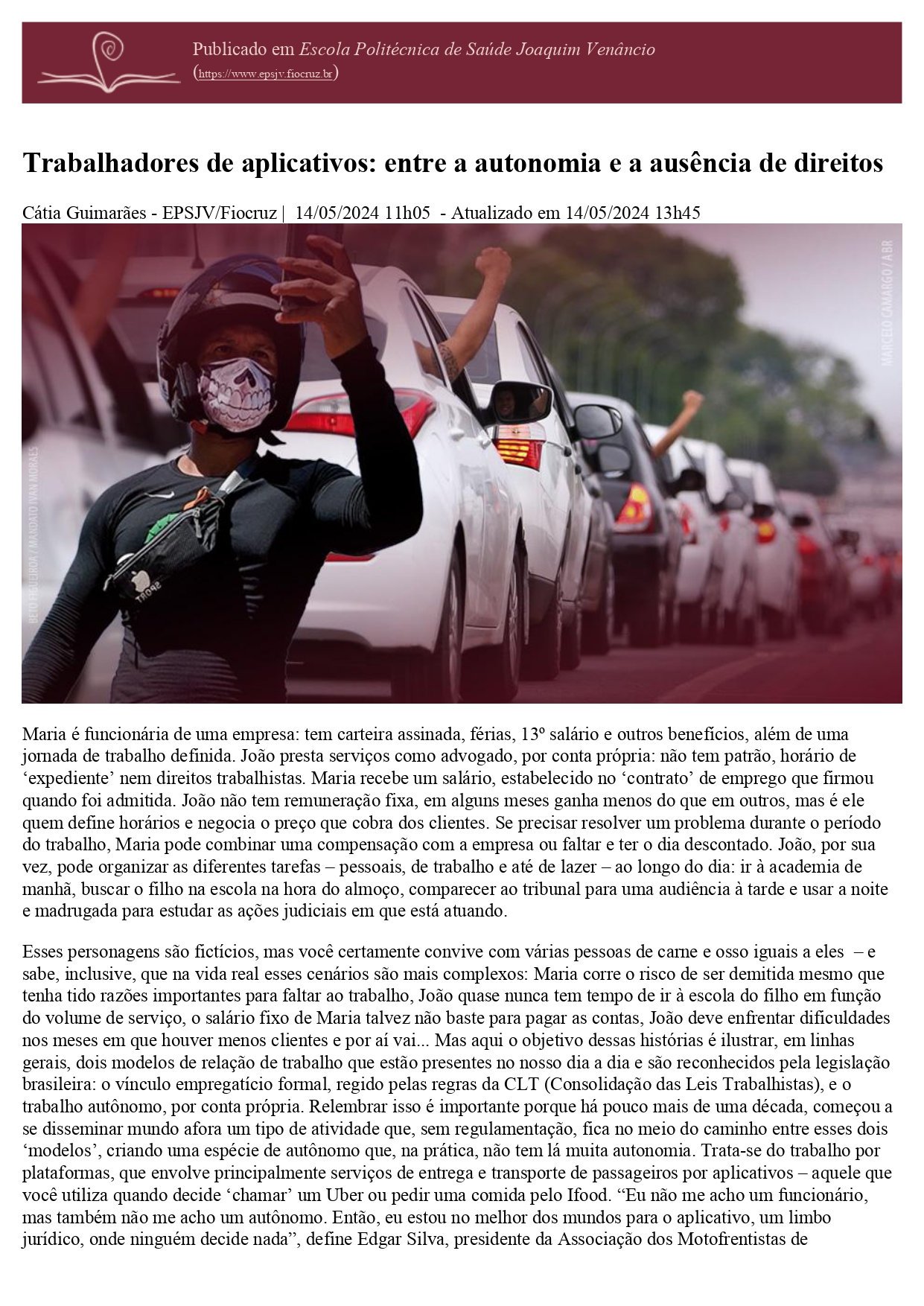
App workers: between autonomy and lack of rights
The article discusses Bill 12/2024, demonstrating its weaknesses in terms of guaranteeing workers' rights and suggesting ways in which these rights can be truly ensured.
Author: Cátia Guimarães et al.
Year of Publication: 2024
On the road with Uber: an ethnography
The purpose of this article is to investigate the work management strategies employed by Uber in relation to its drivers. Using the participant observation method, the researcher drove a car carrying out trips mediated by the platform for a period of four months in the Metropolitan Region of Salvador, Bahia. The company operates with a management strategy that encourages false entrepreneurship and, at the same time, obsecures the employment relationship, engaging in concealment. To this end, it uses tactics such as incentives, task-based work, pedagogism, fraud, risk sharing, and obscurantism, as ethnography has identified.
Author: Ilan Fonseca
Year of Publication: 2024
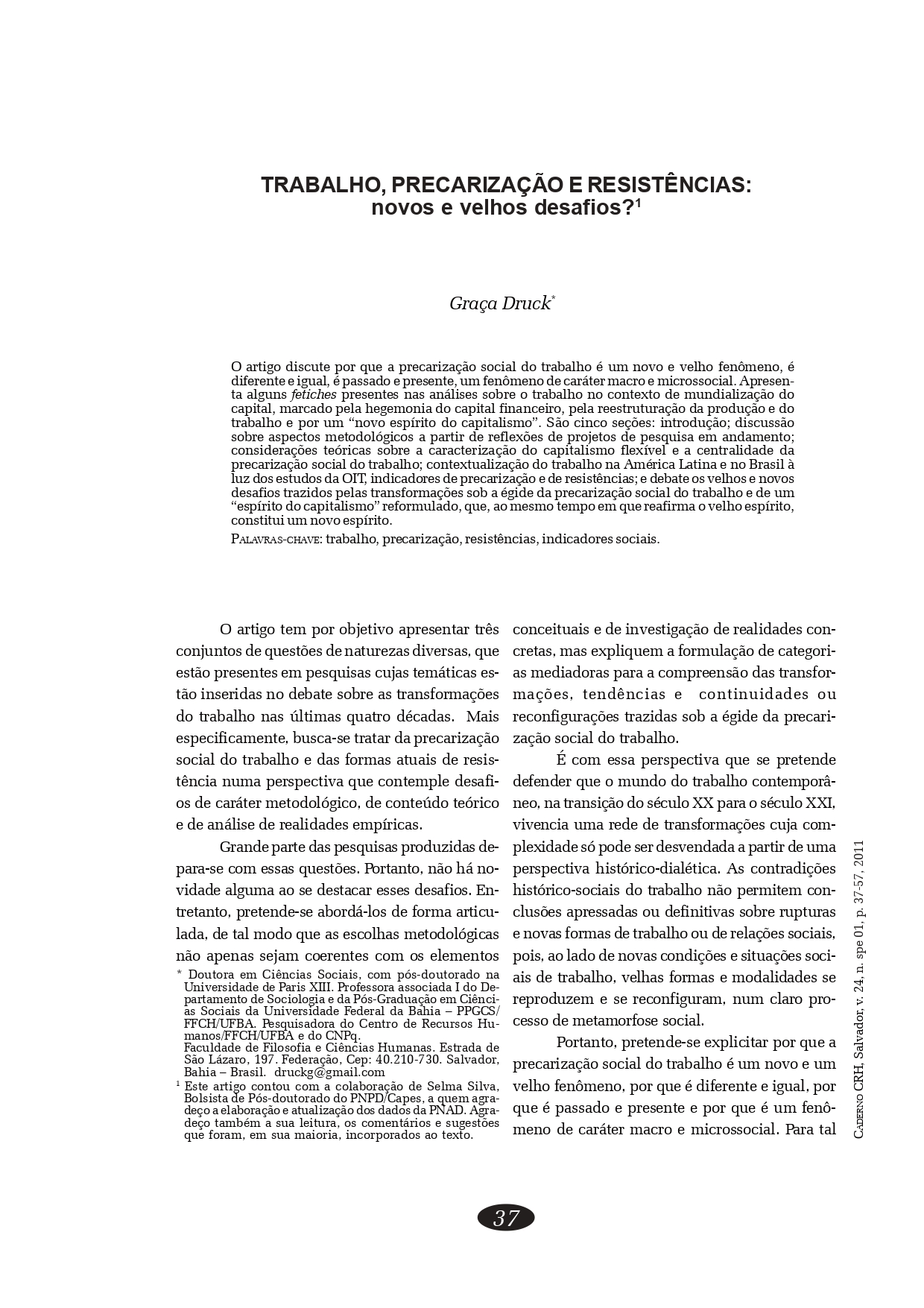
Work, precarization, and resistance: new and old challenges?
The article discusses why the social precariousness of work is a new and old phenomenon, is different and the same, is past and present, a phenomenon of a macro and microsocial nature. It presents some fetishes present in analyses of work in the context of the globalization of capital, marked by the hegemony of financial capital, the restructuring of production and work, and a "new spirit of capitalism."
Author: Graça Druck
Year of Publication: 2011
Mobilizations / Resistance
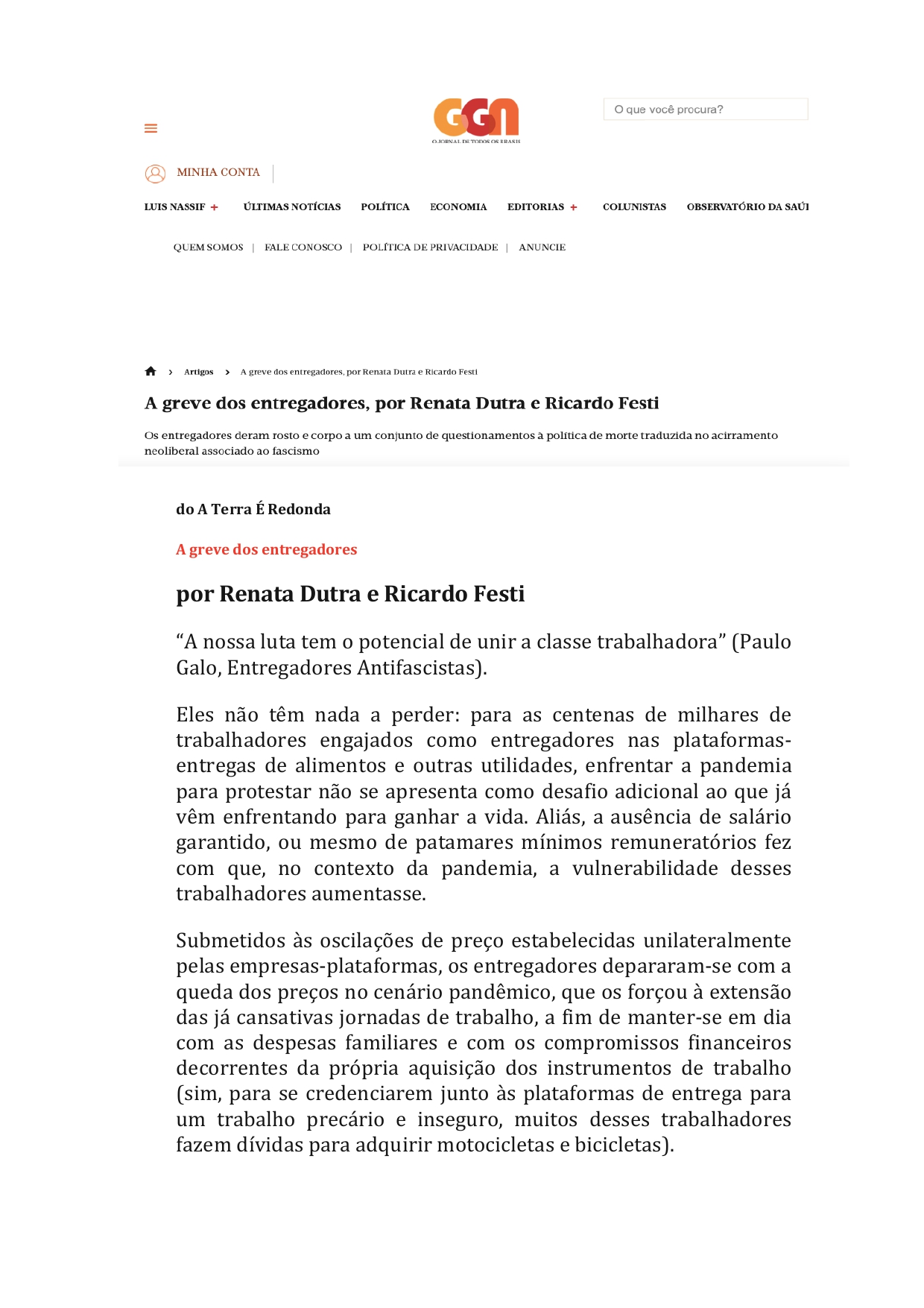
The delivery workers' strike
The article analyzes the July 1 strike, demonstrating that it mobilized not only a contingent of mobilization force with political impact from app-based delivery workers, but also a heterogeneity of political positions.
Author: Renata Dutra & Ricardo Festi
Year of Publication: 2020
The struggle for the rights of “uberized” workers: initial notes on collective organization and action
The article analyzes new forms of Uberized work and their impact on the labor market and the regulation of labor relations, as well as examining workers' reactions in the field of collective organization and representation.
Author: Thiago Patricio Gondim
Year of Publication: 2020
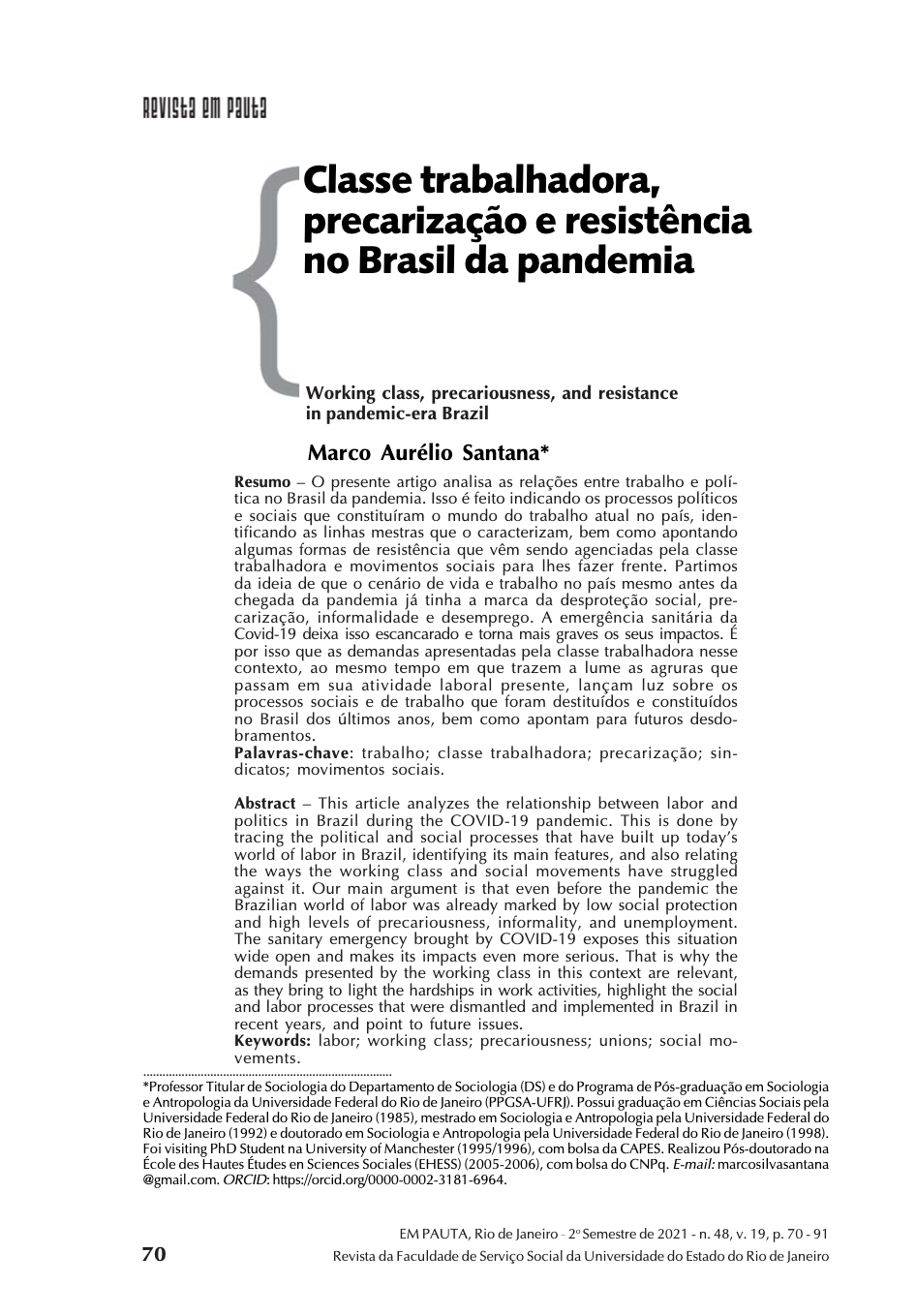
The working class, precarization, and resistance in Brazil during the pandemic
The article analyzes the relationship between work and politics in Brazil during the pandemic. It does so by pointing out the political and social processes that have shaped the current world of work in the country, identifying the main trends that characterize it, and highlighting some forms of resistance that have been organized by the working class and social movements to confront these trends.
Author: Marco Aurélio Santana
Year of Publication: 2021
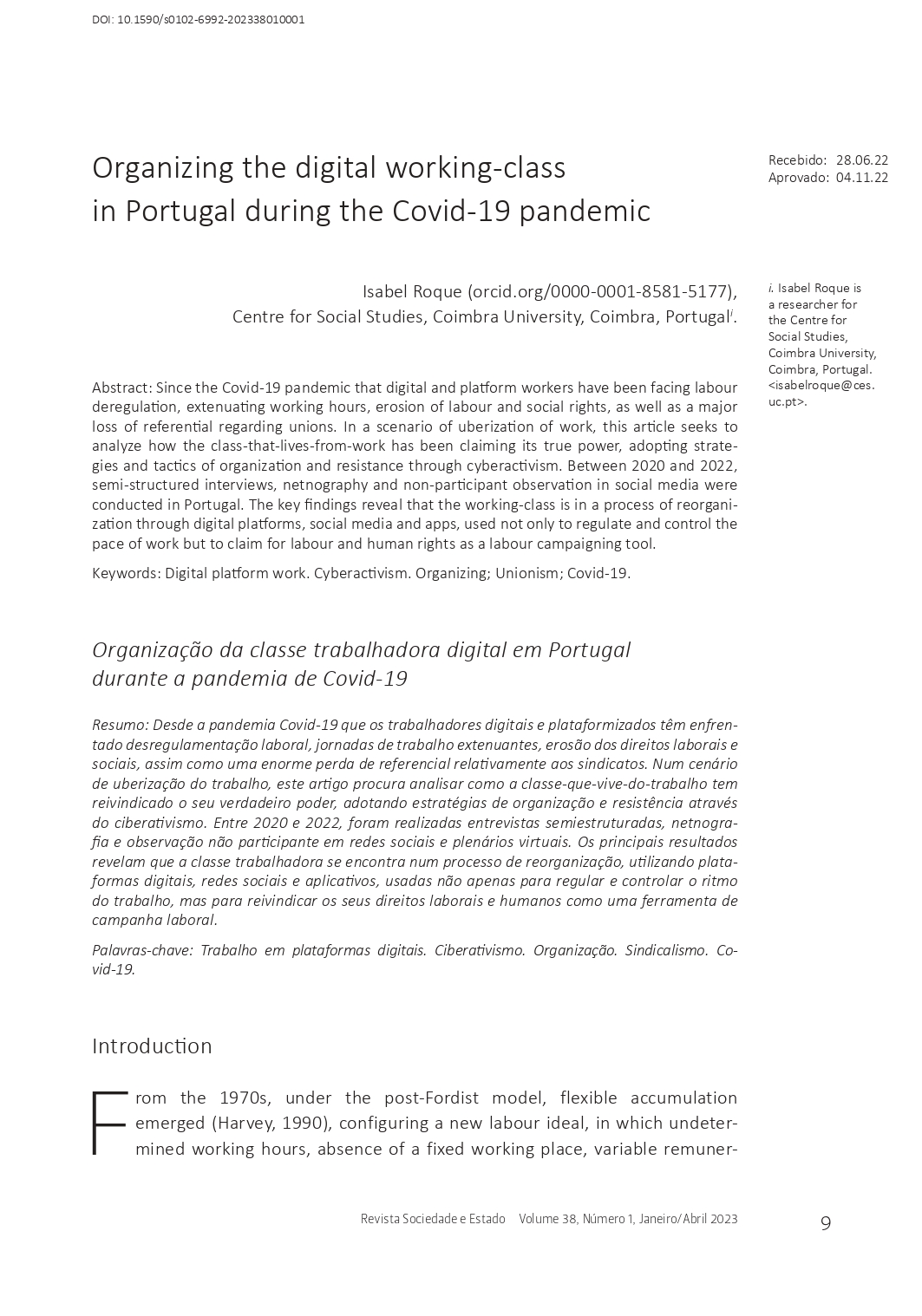
Organizing the digital working class in Portugal during the COVID-19 pandemic
The article seeks to analyze how the working class has been claiming its true power, adopting strategies of organization and resistance through cyberactivism. Between 2020 and 2022, semi-structured interviews, netnography, and non-participant observation were conducted on social networks and virtual plenary sessions. The main results reveal that the working class is undergoing a process of reorganization, using digital platforms, social networks, and applications, not only to regulate and control the pace of work, but also to claim their labor and human rights as a labor campaign tool.
Author: Isabel Roque
Year of Publication: 2022
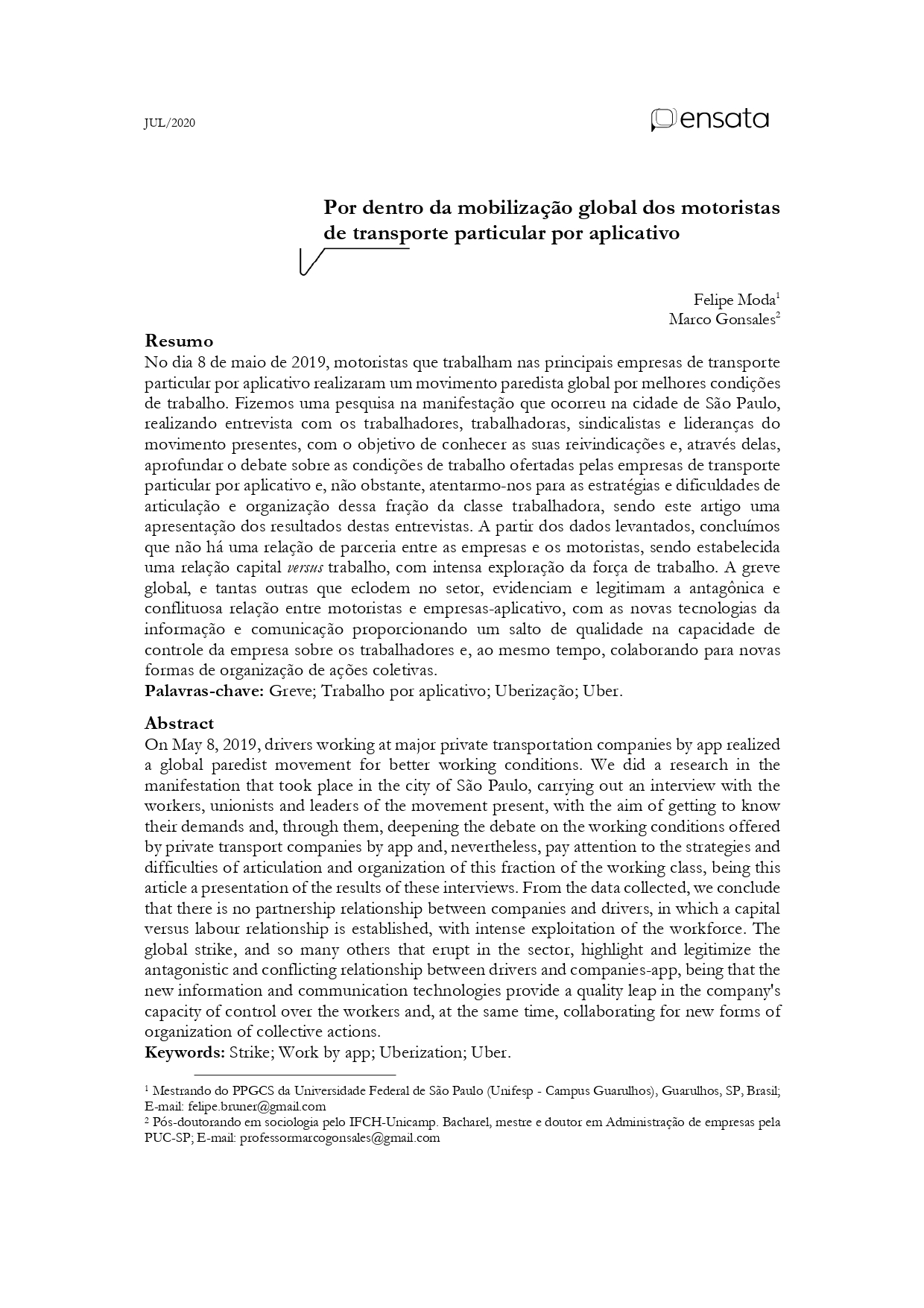
Inside the global mobilization of ride-hailing apps
The article conducted interviews with workers, union members, and leaders of the movement who were present, with the aim of learning about their demands and, through them, deepening the debate on the working conditions offered by private transportation companies through apps. Nevertheless, we focused on the strategies and difficulties of coordinating and organizing this segment of the working class. This article presents the results of these interviews.
Author: Marco Gonsales & Felipe Moda
Year of Publication: 2020