

Non-discrimination at work
A real right is to have a job that ensures and protects workers from the most diverse forms of discrimination, including those based on gender, race, and origin.
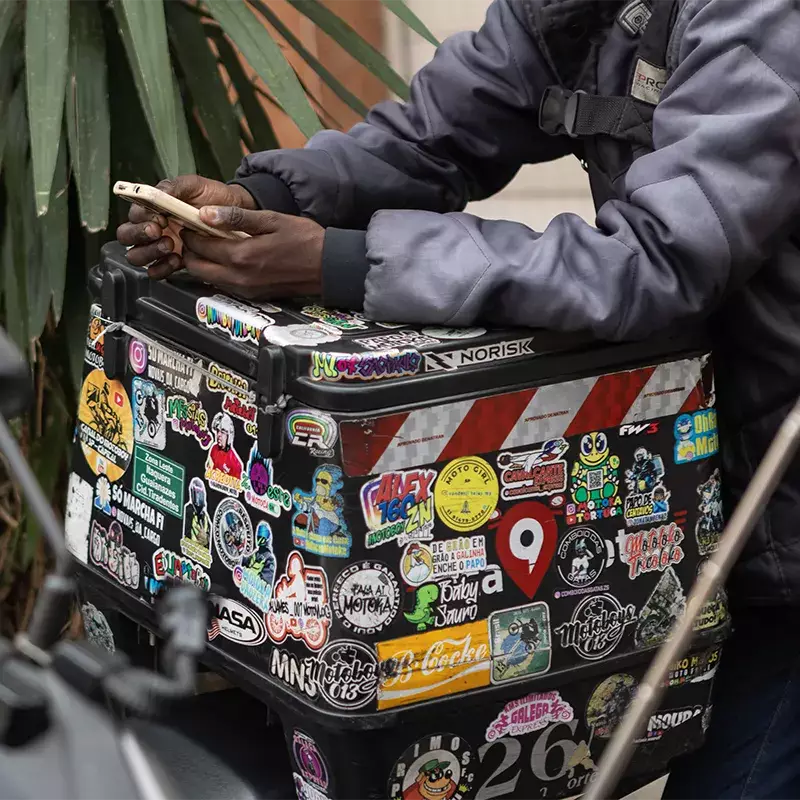
Discrimination in the Workplace
In today's world, it is unacceptable for the workplace to continue to reproduce various forms of discrimination, such as those based on race, gender, different forms of ableism, as well as ageism, transphobia, homophobia, regional prejudice, xenophobia, fatphobia, among other discriminatory manifestations against individuals or social groups.
Discrimination occurs in different ways, which may include attitudes directed at an individual or social group, or manifest itself in objective and material ways that differentiate between people's work.
Some examples of situations that portray discrimination would be:
- Different pay for equal work;
- Absence of maternity and paternity leave;
- Scoring and ranking metrics that disregard differences in gender, disability, etc.;
- Discrimination based on accents, ways of speaking, physical appearance, religion, place of origin, age, etc.;
- Moral or sexual harassment and lack of good practices such as anonymous reporting channels and mechanisms to curb such behavior;
- Requesting personal and unnecessary data for the purpose of discrimination; and
- Lack of training and capacity building to promote a discrimination-free work environment.
The creation of a work environment and relationships that actively combat oppression and discrimination, whether practiced by individuals, existing in work relationships, or embedded in technology, is a genuine right of workers.
Work on Digital Platforms Must Also Be Free from Discrimination
When many digital platforms incorrectly classify their workers as self-employed, they exclude them from historically won labor rights.
Predominantly, this exclusion of rights falls precisely on social groups that have long been and still are subjected to various forms of oppression, such as women, Black people, LGBTQIAPN+ people, among others. This, moreover, can reproduce and reinforce processes of discrimination.
In addition to this more general form of exclusion, there are other types of discrimination that may be present within the systems developed by many digital platforms, such as:
- Rating systems based on customer reviews that allow workers to be discriminated against. An example would be female workers who are sexually harassed at work receiving low ratings from the customers who harassed them;
- Automated worker classification systems that disregard the specific characteristics of certain groups. One example of this is women who are responsible for caring for family members and are therefore penalized by the systems for not being entirely available to the platforms.
- Automated decisions by systems that do not take racial characteristics into account, such as Black workers being blocked from platforms by facial recognition devices that are not suited to their skin color.
- Possibility of monitoring and digital discrimination against workers based on their political and union positions; and
- Systems that create wage discrimination based on non-transparent criteria and do not pay equal wages for equal work.

Motorcycle Mortality and Accidents by Racial Breakdown
Black people
2016 – 75 deaths per 100,000 inhabitants
2021 – 102 deaths per 100,000 inhabitants
White people
2016 – 48 deaths per 100,000 inhabitants
2021 – 55 deaths per 100,000 inhabitants
Çarê-IEPS - Bulletin n. 2/2023
Algorithmic Management and Discrimination
The fight against discrimination in the workplace on digital platforms should be no different from other sectors. Companies that operate digital platforms must actively work against the reproduction of such discrimination in their automated systems and guarantee real rights that take into account the structural inequalities in society. Various forms of discrimination in the workplace have a long history of protests and struggles against this condition.
If women, for example, are the social group that performs the most reproductive work, their availability to be logged into the platform decreases in comparison to men. For those who take care of the home and have children, being logged in and available on the platforms for 12 hours is not a feasible reality. On the other hand, because they do not share domestic tasks, men are able to devote more time to the platforms.
Thus, if there are control and ranking mechanisms that favor those who are more willing and/or available, distributing tasks or rewarding workers who are logged into their platform for longer periods of time, the universalization of evaluation and punishment metrics, provided by the lack of transparency in algorithmic management, instead of democratizing work, ends up increasing existing inequalities in society, penalizing already oppressed sectors and social groups.
Algorithmic management has the capacity to create wage individualization, in which each worker becomes a competitor of their coworkers. Payment by task, in amounts that are generally not stable, ends up producing a situation in which workers increase the intensity of their work to maximum levels. This implies longer working hours, which can also lead to an acceleration of the pace of work that compromises their own lives and those of others.
Since the proliferation of digital platforms in the food delivery industry, for example, the number of accidents involving motorcycles has increased considerably. In the delivery sector, black men make up the majority of the workforce. This may be associated with the discrepancy in accidents—both fatal and non-fatal—involving black and white men, with black men being more severely penalized. (LINK research)
On these issues, the legislation recently approved by the European Union regulating work on digital platforms addresses in detail the particularities related to discrimination on platforms, as well as the impacts on workers' health and safety.