

Right to Information and Protection Against Arbitrary Decisions
Having access to information about the organization of one's own job is a genuine right, fundamental for workers to be able to make their own choices and challenge arbitrarily made decisions.

Right to Information at Work
For the vast majority of people, work plays a significantly important role in their lives, either because of the amount of time they spend working, their need for remuneration, the meaning that a particular activity has in their lives, or the other they spend doing it, factors.
Therefore, being able to make informed decisions about whether to accept a job, how best to perform your duties, or how to plan for the future is crucial to the life of any worker.
Hence the importance of having access to a range of information about how work is organized: remuneration, the risks involved in the job, benefits and rights, information about best and safest practices at work, opportunities for increased earnings and career advancement, etc.
It is important that this information is available to workers, easily accessible, and communicated clearly.
Access to information is essential for workers to be able to challenge arbitrary decisions or what they consider inappropriate in the organization of their work.
Platform Work and the Right to Information
The way in which many digital platforms organize work through algorithmic management can exacerbate issues related to workers' lack of access to fundamental information about their own activity.
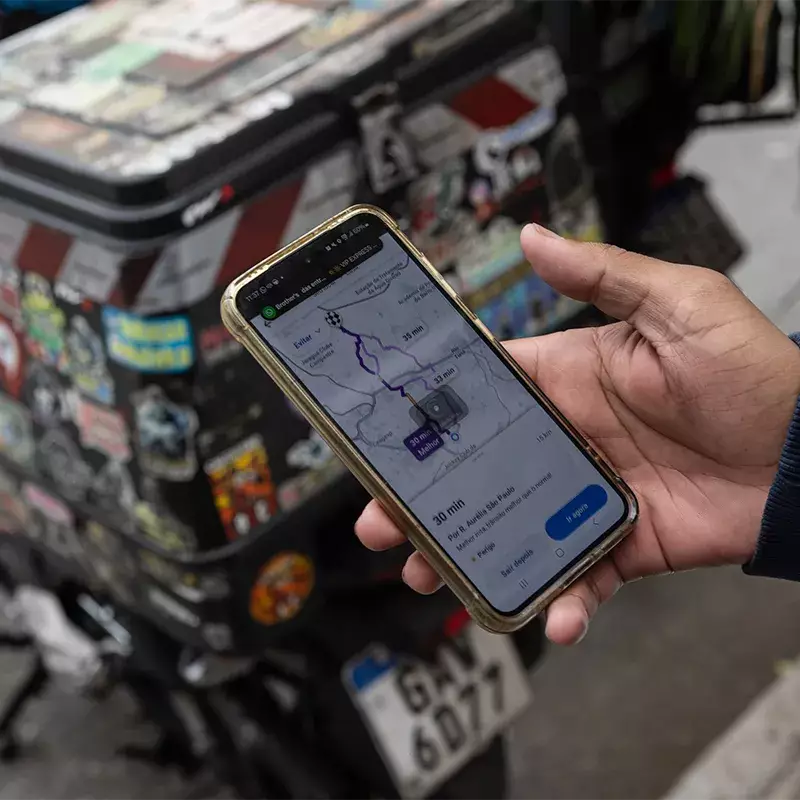
Cell phones used during work have the ability to capture a wide range of data about the activities performed in real time.
Without it being clear to the worker how this is done, this data can be used to build profiles on each user, which will, in turn, be used in the various automated decision-making processes of the platforms.
In the best-known sectors of private transportation and digital platform deliveries, research indicates that it is not entirely clear to workers:
- How is a particular service designated?
- Whether rejection of services may influence future offers;
- How service prices are calculated;
- How prices are determined during times of high demand;
- How many workers are available in a given region, etc.
These are aspects that determine a fundamental component of a worker's activity: their remuneration. They can be responsible for wage discrimination processes, that is, paying different amounts for equal work.
Furthermore, given the importance of remuneration in the lives of workers, it can be used as a means of control, pressuring workers, for example, to work longer hours and more intensely, which can impact their physical and mental health and their personal relationships.
Member States shall require digital labor platforms to inform [...] all types of decisions supported or made by automated decision-making systems, including when such systems support or make decisions that do not significantly affect people working on the platforms.
European Union Directive on Improving Working Conditions on Digital Platforms
Transparency and Oversight of Algorithmic Management
The ability of digital platforms to capture data and implement automated decisions requires the regulation of algorithmic management in order to protect workers and support the actions of public authorities.
In general terms, this regulation should be guided by three dimensions:
- transparency,
- restriction,
- oversight of platforms.
The Directive on improving working conditions on digital platforms, recently approved by the European Union, points to the possibility of promising regulation in this direction.
Firstly, workers must have easy, clear, and detailed access to information about how digital platforms organize algorithmic management: information about what data is captured, when it is captured, where it is stored, the purposes for which this data is captured, how it is used in the platforms' automated decision-making processes, among other things.
In addition to these transparency measures, the scope and reach of data collection and automated decisions by platforms must also be limited.
On the one hand, platforms should not capture data outside of working hours, or data related to workers' political opinions or union membership, their emotional, psychological, or health status, etc. On the other hand, automated decisions cannot discriminate or jeopardize the safety and health of workers and, especially in the case of those that significantly affect their lives, must be subject to human review. This is a crucial issue for those who work on platforms, given the recurring complaints of arbitrary punishments carried out by automated processes, which can block a worker's profile. Above all, in the processes of regulating and restricting platforms, it is essential to consult the workers themselves about how they are organized.
Transparency and restrictions on algorithmic management, however, can only be guaranteed if there is effective internal oversight of platforms by representatives of workers and independent professionals who are protected against any kind of retaliation. In addition, it is necessary to ensure that public authorities have broad access to data and to the forms of organization of algorithmic work management.
In short, workers must have a full right to information, provided by the digital platforms themselves, about how work is organized and how their systems work. Platforms must be evaluated and monitored in order to guarantee the health and safety of workers throughout the work process and to curb possible discrimination and arbitrariness in automated decisions. To this end, it is also necessary that platforms be independently supervised, with the support of workers' representatives, including the strengthening of the role of public authorities.